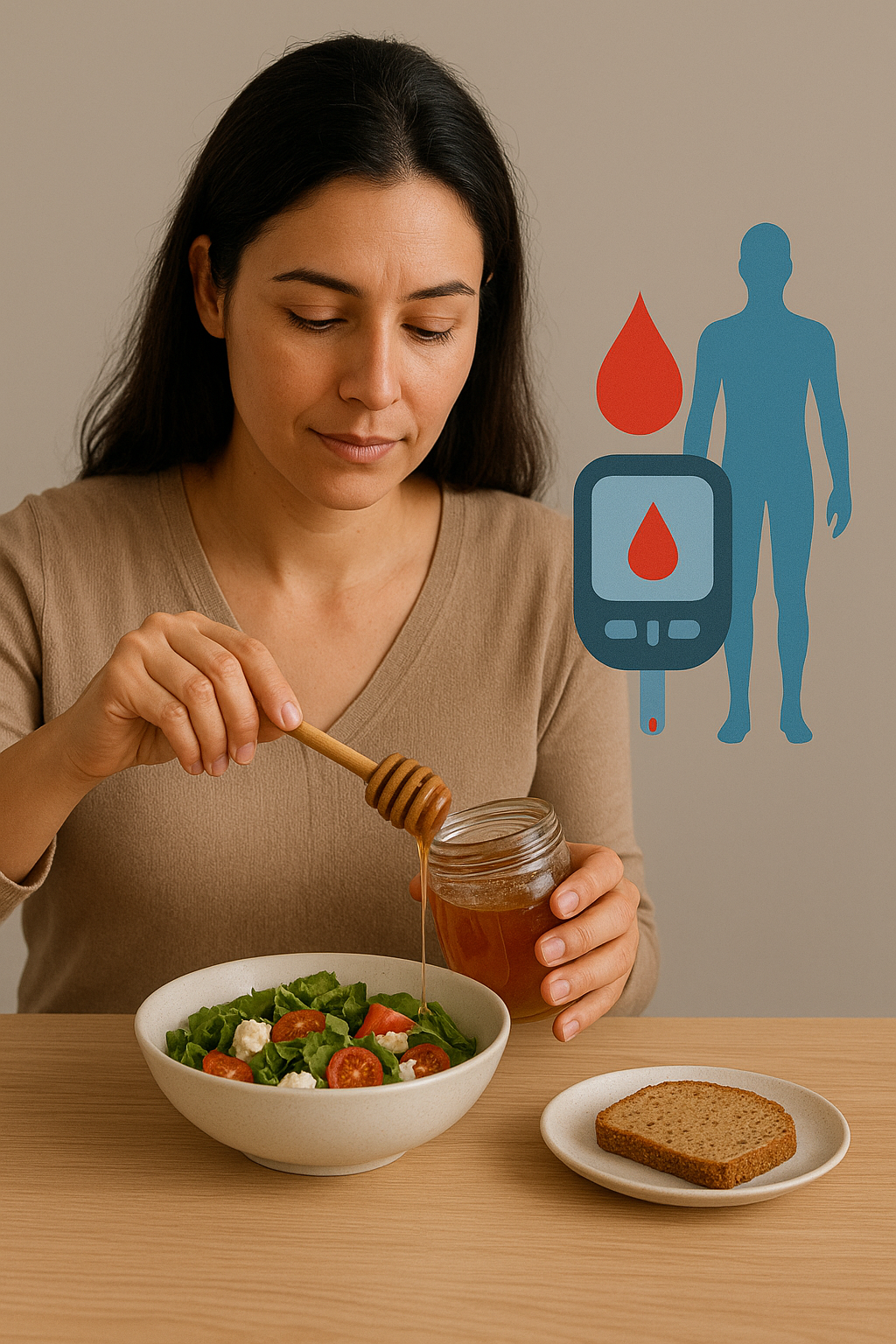
Honey is often praised as a natural sweetener with many health benefits. But for people with diabetes, the question arises — is honey a better alternative to sugar? This article explores the effects of honey on blood glucose, its nutritional value, and whether diabetics can safely include it in their diet.
What Is Honey?
Honey is a natural product made by bees from the nectar of flowers. It mainly contains:
- Fructose (about 40%)
- Glucose (about 30%)
- Water (around 17–20%)
- Small amounts of vitamins, minerals, antioxidants, and enzymes
Although honey is less processed than table sugar, it still contains carbohydrates that affect blood glucose levels.
Nutritional Value of Honey (Per 1 Tablespoon / 21 grams)
| Nutrient | Amount |
|---|---|
| Calories | 64 kcal |
| Carbohydrates | 17 g |
| Sugar | 17 g |
| Fiber | 0 g |
| Fat | 0 g |
| Protein | 0.1 g |
Honey also provides trace minerals like iron, zinc, potassium, and magnesium, along with antioxidants such as flavonoids and phenolic acids.
Honey vs. Sugar: Which Is Better for Diabetics?
Both honey and table sugar (sucrose) are forms of carbohydrates and raise blood glucose levels. However, honey has a slightly lower glycemic index (GI) than sugar.
- Glycemic Index (GI) of Honey: ~50–60
- Glycemic Index (GI) of Table Sugar: ~65
This means honey may cause a slower rise in blood glucose compared to refined sugar. But the difference is small — moderation is still essential.
Effects of Honey on Blood Sugar
Several studies have shown that small, controlled amounts of honey may have less impact on blood sugar spikes compared to other sweeteners. However:
- Overconsumption of honey can increase blood glucose and HbA1c levels.
- Diabetics should count honey as part of their total carbohydrate intake.
- Raw, unprocessed honey is preferred over processed honey, which may contain added sugars or syrups.
Health Benefits of Honey (When Used in Moderation)
- Antioxidant Properties – Helps reduce oxidative stress linked to diabetic complications.
- Anti-inflammatory Effects – May support vascular health and reduce inflammation.
- Wound Healing – Honey has been used topically to treat diabetic foot ulcers.
- Energy Source – Provides quick energy for mild hypoglycemia when glucose tablets aren’t available.
How Much Honey Can a Diabetic Eat?
If your blood sugar levels are well controlled, you may occasionally use ½ to 1 teaspoon of raw honey as a natural sweetener — ideally with fiber-rich or protein-rich foods to minimize glucose spikes.
Always consult your doctor or dietitian before adding honey to your diabetic meal plan.
Tips for Using Honey Safely in Diabetes
✅ Use small portions — measure rather than pour freely.
✅ Choose raw, unprocessed, or organic honey.
✅ Avoid honey when your blood sugar levels are unstable.
✅ Never mix honey with high-carb foods like white bread or sweets.
✅ Monitor your blood glucose after consuming honey to understand your body’s response.
Myths About Honey and Diabetes
🚫 Myth 1: “Honey doesn’t raise blood sugar.”
→ False. Honey contains natural sugars that still increase glucose levels.
🚫 Myth 2: “Honey is a cure for diabetes.”
→ False. Honey does not reverse or cure diabetes; it can only be used as a mild alternative in moderation.
Conclusion
Honey may be a better choice than refined sugar for diabetics, but it’s not completely safe. It should be used sparingly and under medical guidance. The key to diabetic nutrition is balance, portion control, and regular monitoring of blood sugar levels.