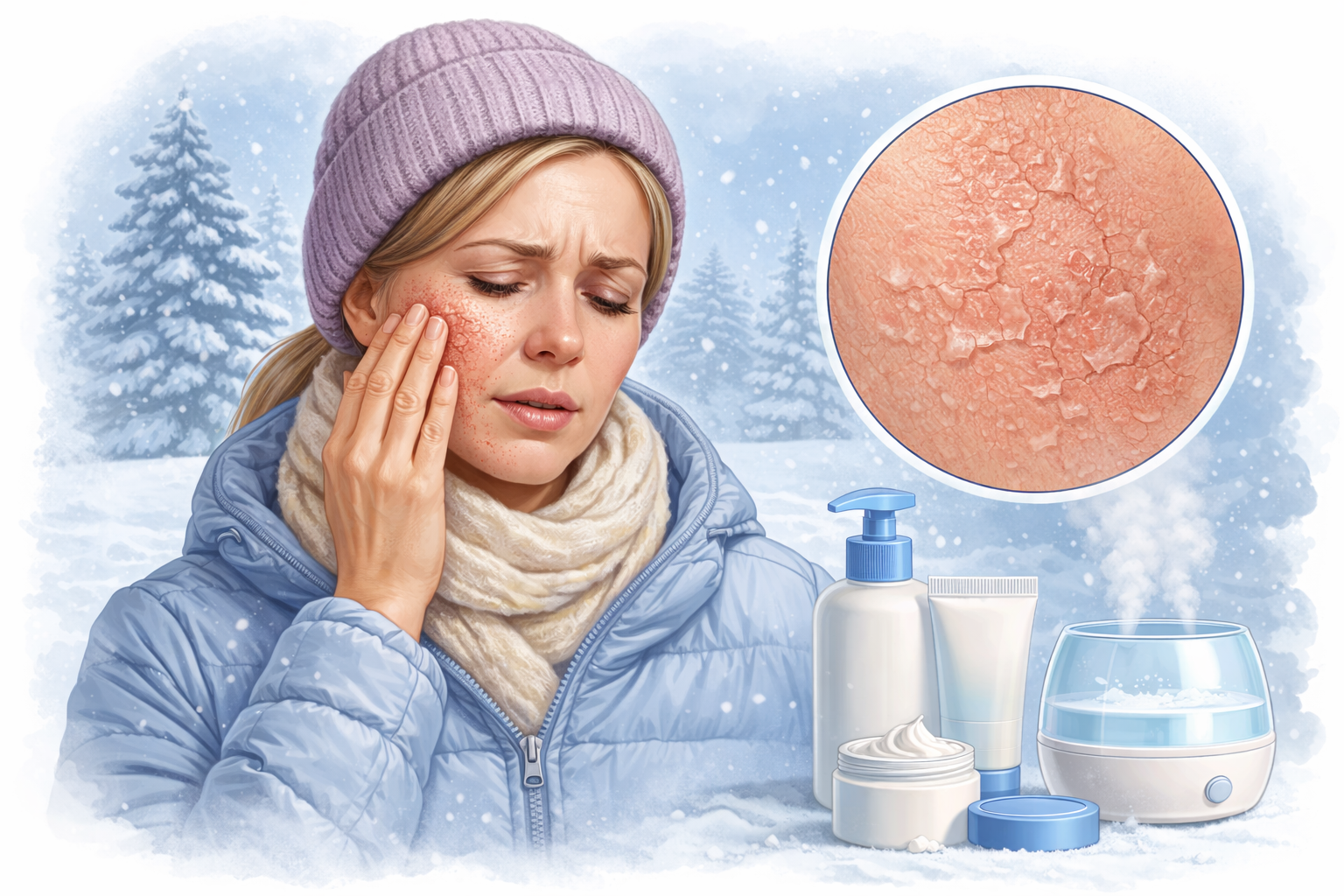
Dry skin in winter is a common problem that affects people of all ages. Cold weather, low humidity, and indoor heating can strip the skin of its natural moisture, leading to roughness, itching, and irritation. Understanding the causes of winter dry skin and adopting proper skincare habits can help maintain healthy and comfortable skin throughout the season.
Why Does Skin Become Dry in Winter?
During winter, the air holds less moisture, and frequent exposure to cold winds further weakens the skin barrier. Additionally, indoor heaters reduce humidity levels, causing excessive moisture loss from the skin.
Common Causes Include:
- Cold and dry outdoor air
- Low indoor humidity due to heaters
- Hot showers and frequent bathing
- Use of harsh soaps and detergents
- Aging and underlying skin conditions
- Poor hydration and nutrition
Symptoms of Dry Skin in Winter
Winter dryness can vary from mild discomfort to severe irritation. Common signs include:
- Rough or flaky skin
- Tightness, especially after washing
- Itching and redness
- Fine cracks or peeling
- In severe cases, bleeding from cracked skin
Areas most commonly affected are the hands, feet, face, elbows, and legs.
Who Is at Higher Risk?
Certain individuals are more prone to dry skin during winter, such as:
- Elderly people
- Individuals with eczema or psoriasis
- People with diabetes or thyroid disorders
- Those who wash hands frequently
- People living in cold or dry climates
Treatment for Dry Skin in Winter
Proper skincare and lifestyle changes are the key to managing winter dry skin.
Medical and Skincare Treatment
- Use fragrance-free moisturizers and emollients
- Apply moisturizer immediately after bathing
- Use mild, soap-free cleansers
- Apply prescribed creams for severe dryness or eczema
Home Care Tips to Prevent Winter Dry Skin
- Take short, lukewarm showers
- Avoid scrubbing the skin harshly
- Use a humidifier indoors
- Drink adequate water daily
- Wear gloves and warm clothing outdoors
- Choose cotton clothing instead of wool directly on skin
Diet and Hydration for Healthy Skin
A balanced diet plays an important role in maintaining skin hydration.
Skin-Friendly Nutrients Include:
- Omega-3 fatty acids (fish, nuts, seeds)
- Vitamins A, C, and E
- Zinc and antioxidants
- Adequate water and fluids
When to See a Doctor
Consult a healthcare professional if:
- Dry skin becomes painful or infected
- Symptoms do not improve with moisturizers
- You experience severe itching or cracks
- There are signs of eczema or psoriasis
Conclusion
Dry skin in winter is a manageable condition with proper skincare, hydration, and lifestyle adjustments. By protecting the skin barrier and maintaining moisture levels, you can prevent discomfort and keep your skin healthy throughout the cold season. Early care and preventive measures are essential for long-term skin health.