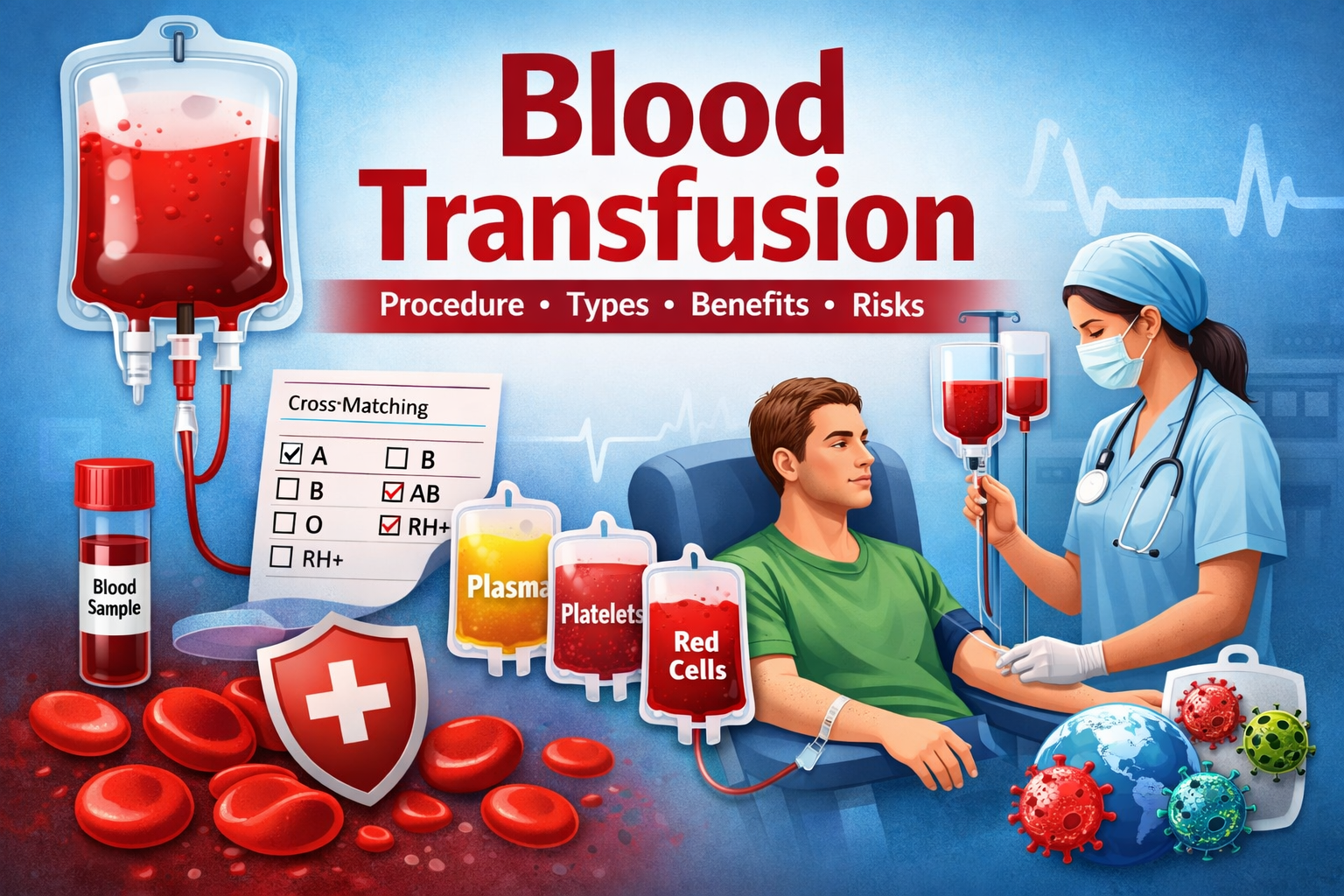
Blood transfusion is one of the most important medical advancements that has saved millions of lives worldwide. It involves transferring safe, screened blood or its components into a patient’s bloodstream to restore normal body function. Blood transfusion not only saves lives in emergencies but also significantly improves overall health and quality of life in many medical conditions.
What Is a Blood Transfusion?
A blood transfusion is a medical procedure in which blood or specific blood components such as red blood cells, plasma, or platelets are given through an intravenous (IV) line. The type of transfusion depends on the patient’s medical needs and health condition.
Major Health Benefits of Blood Transfusion
1. Improves Oxygen Supply to the Body
Red blood cells carry oxygen from the lungs to all body tissues. In patients with severe anemia or blood loss, blood transfusion restores oxygen delivery, reducing fatigue, dizziness, and breathlessness.
2. Life-Saving in Emergency Situations
Blood transfusion is critical in:
- Road traffic accidents
- Severe injuries and trauma
- Heavy bleeding during surgery
- Post-partum hemorrhage
Timely transfusion can prevent shock, organ failure, and death.
3. Treats Severe Anemia Effectively
Patients with chronic anemia due to nutritional deficiency, kidney disease, cancer, or bone marrow disorders benefit greatly from blood transfusion when medications alone are insufficient.
4. Supports Cancer and Chemotherapy Patients
Cancer patients often develop low blood counts due to chemotherapy. Blood transfusion:
- Improves strength and energy
- Reduces infection risk
- Helps patients tolerate treatment better
5. Helps Patients with Blood Disorders
People with conditions such as:
- Thalassemia
- Hemophilia
- Aplastic anemia
- Sickle cell disease
require regular transfusions to maintain normal health and prevent complications.
6. Improves Recovery After Surgery
After major surgeries, blood transfusion helps:
- Restore blood volume
- Speed up wound healing
- Reduce postoperative complications
- Improve overall recovery
7. Prevents Excessive Bleeding
Platelet and plasma transfusions improve blood clotting in patients with:
- Low platelet count
- Liver disease
- Severe infections
- Bleeding disorders
This reduces the risk of life-threatening bleeding.
8. Enhances Quality of Life
For patients with chronic illnesses, blood transfusion:
- Reduces weakness and fatigue
- Improves physical activity tolerance
- Enhances mental well-being
- Allows a more normal daily life
Safety and Health Protection
Modern blood transfusion is very safe due to:
- Strict donor screening
- Advanced testing for infections
- Proper blood grouping and cross-matching
- Continuous patient monitoring
The risk of complications is extremely low when performed under medical supervision.
Who Can Benefit Most from Blood Transfusion?
- Patients with severe anemia
- Pregnant women with heavy blood loss
- Accident and trauma victims
- Cancer and dialysis patients
- Individuals with inherited blood disorders
- Surgical patients
Conclusion
Blood transfusion plays a vital role in improving health, saving lives, and restoring normal body function. From emergency care to chronic disease management, the health benefits of blood transfusion are immense. With modern safety standards, it remains one of the most reliable and effective medical treatments available today.