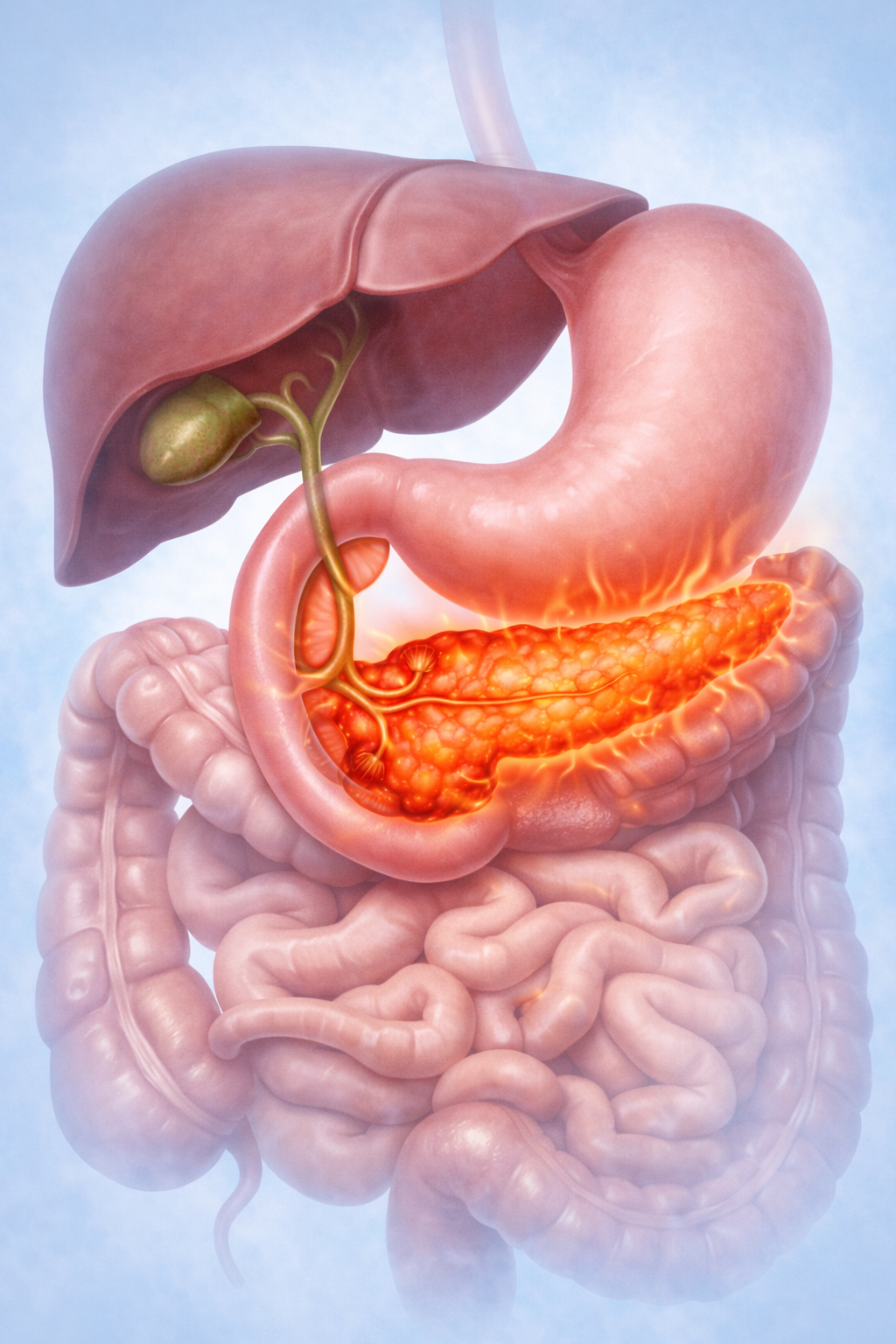
Pancreatitis is a medical condition in which the pancreas becomes inflamed, leading to abdominal pain and digestive problems. The pancreas plays a vital role in digestion and blood sugar control. Pancreatitis can be acute or chronic, and early diagnosis is important to prevent serious complications.
What Is Pancreatitis?
Pancreatitis occurs when digestive enzymes become active inside the pancreas instead of the small intestine. This causes irritation, inflammation, and damage to pancreatic tissue.
The condition may develop suddenly (acute pancreatitis) or progress slowly over time (chronic pancreatitis).
Types of Pancreatitis
1. Acute Pancreatitis
- Sudden onset of severe abdominal pain
- Usually short-term
- Can be life-threatening if severe
2. Chronic Pancreatitis
- Long-standing inflammation
- Leads to permanent pancreatic damage
- Affects digestion and insulin production
Common Causes of Pancreatitis
Pancreatitis may occur due to:
- Gallstones
- Excessive alcohol consumption
- High triglyceride levels
- Certain medications
- Abdominal injury
- Infections
- Genetic disorders
Symptoms of Pancreatitis
Symptoms vary depending on the type but commonly include:
- Severe upper abdominal pain (may radiate to the back)
- Nausea and vomiting
- Fever
- Loss of appetite
- Weight loss (in chronic cases)
- Oily or foul-smelling stools
Diagnosis of Pancreatitis
Doctors diagnose pancreatitis using:
- Blood tests (amylase and lipase levels)
- Ultrasound of abdomen
- CT scan or MRI
- Stool tests (for chronic pancreatitis)
Early diagnosis helps prevent complications.
Treatment of Pancreatitis
Acute Pancreatitis Treatment
- Hospital admission
- Intravenous fluids
- Pain management
- Fasting to rest the pancreas
- Treatment of underlying cause (e.g., gallstones)
Chronic Pancreatitis Treatment
- Pain control
- Pancreatic enzyme supplements
- Low-fat diet
- Avoidance of alcohol and smoking
- Insulin therapy if diabetes develops
Complications of Pancreatitis
Untreated pancreatitis may lead to:
- Pancreatic pseudocysts
- Infections
- Diabetes mellitus
- Malnutrition
- Organ failure (in severe cases)
Lifestyle and Dietary Tips
- Eat small, low-fat meals
- Avoid alcohol completely
- Quit smoking
- Stay hydrated
- Follow doctor-recommended diet plans
When to See a Doctor
Seek immediate medical help if you experience:
- Sudden severe abdominal pain
- Persistent vomiting
- Fever with abdominal pain
- Yellowing of skin or eyes
Conclusion
Pancreatitis is a serious condition that requires prompt medical attention. With early diagnosis, proper treatment, and lifestyle modifications, many patients can manage symptoms effectively and prevent long-term complications. Regular follow-up and adherence to medical advice are essential for maintaining pancreatic health.
🔍 SEO Keywords
- Pancreatitis
- Acute pancreatitis
- Chronic pancreatitis
- Pancreatitis symptoms
- Causes of pancreatitis
- Pancreatitis treatment