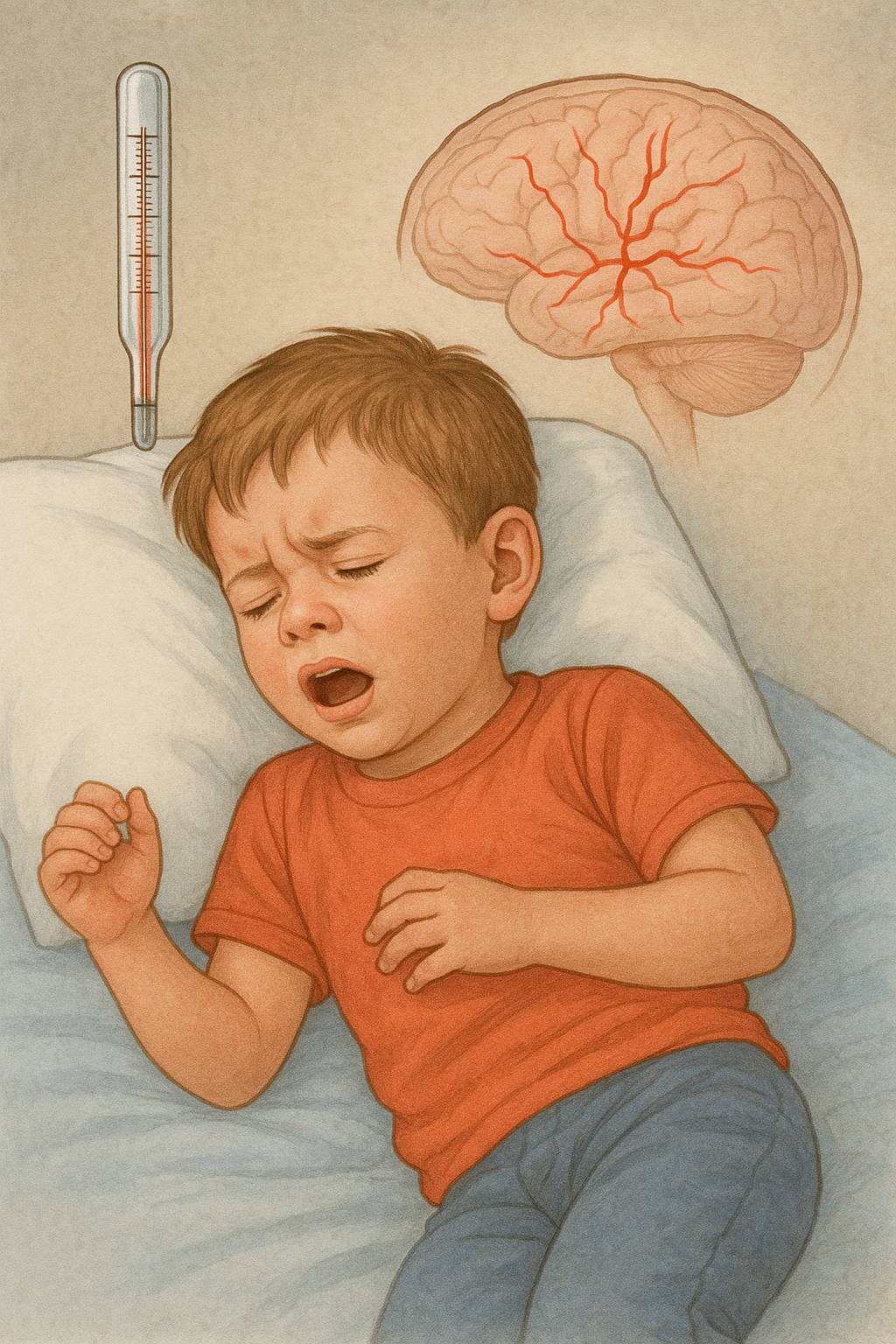
Febrile convulsions, also known as febrile seizures, are common episodes of involuntary muscle movements that occur in young children due to fever. These seizures are typically benign and self-limiting, but they can be frightening for parents and caregivers. Understanding the causes, symptoms, and proper management of febrile convulsions helps ensure timely care and reassurance for families.
What Are Febrile Convulsions?
A febrile convulsion is a seizure triggered by a sudden rise in body temperature, often due to an infection. They usually occur in children between 6 months and 5 years of age, with the peak incidence around 18 months. Unlike epilepsy, febrile convulsions are not caused by an underlying brain disorder.
Causes of Febrile Convulsions
The primary cause is fever, usually resulting from:
- Viral infections (such as influenza, roseola, or adenovirus)
- Ear infections or tonsillitis
- Post-immunization fever
- Bacterial infections
Genetic predisposition also plays a role — children with a family history of febrile seizures have a higher risk.
Types of Febrile Convulsions
- Simple Febrile Convulsions
- Most common type (about 70–80% of cases)
- Lasts less than 15 minutes
- Affects the whole body (generalized tonic-clonic seizure)
- Occurs once in 24 hours
- Complex Febrile Convulsions
- Lasts more than 15 minutes
- May affect one part of the body (focal seizure)
- May recur within 24 hours
Symptoms of Febrile Convulsions
During a febrile seizure, the following may be observed:
- Sudden loss of consciousness
- Stiffening of the body followed by jerking movements
- Rolling back of eyes
- Foaming at the mouth or drooling
- Temporary loss of bladder or bowel control
- Drowsiness or confusion after the episode (postictal phase)
Most seizures last for a few seconds to 2 minutes, and the child usually recovers fully.
What To Do During a Febrile Convulsion
Witnessing a febrile seizure can be alarming, but calm and prompt action is crucial:
✅ Stay Calm: Most febrile seizures stop on their own within a few minutes.
✅ Lay the child safely: Place the child on a flat surface, away from sharp objects.
✅ Turn to one side: Helps keep the airway clear and prevents choking.
✅ Do not insert anything in the mouth: Avoid spoons or fingers — this can cause injury.
✅ Loosen clothing: Especially around the neck and chest.
✅ Monitor the duration: If it lasts longer than 5 minutes, seek medical help immediately.
When to Seek Immediate Medical Care
You should take the child to a healthcare provider urgently if:
- The seizure lasts more than 5 minutes
- The child has repeated seizures during the same illness
- The child does not regain consciousness after the seizure
- There are signs of meningitis (neck stiffness, persistent vomiting, lethargy)
- The child is less than 6 months old
Diagnosis of Febrile Convulsions
The doctor may perform:
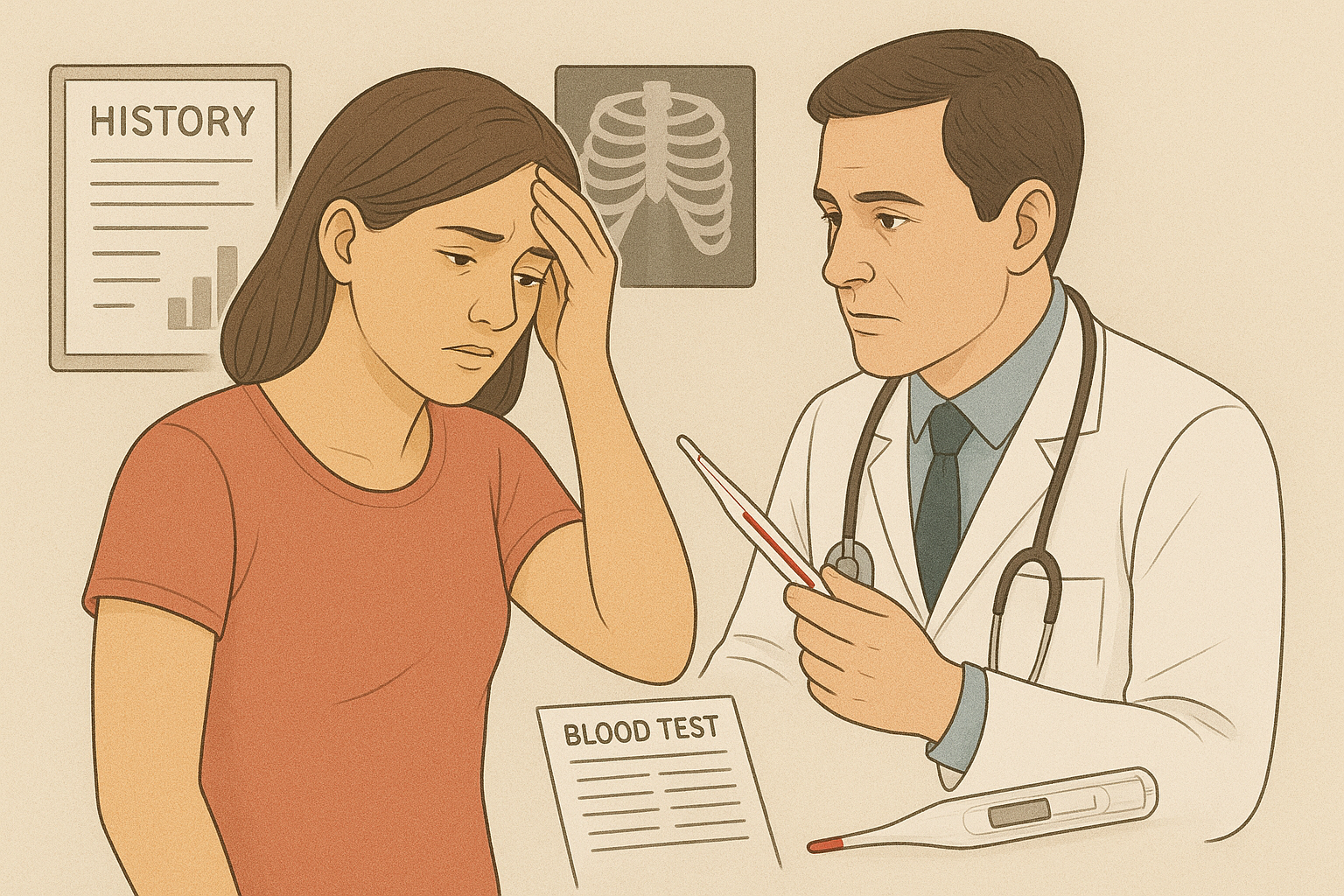
- Detailed history and physical examination
- Temperature measurement and infection source identification
- Blood tests, if infection is suspected
- Lumbar puncture, in infants or if meningitis is suspected
- EEG or brain imaging, only if seizures are complex or atypical
Treatment and Prevention
1. During the Seizure
No specific medication is required during a short febrile seizure except ensuring the child’s safety.
2. After the Seizure
- Antipyretics (e.g., Paracetamol or Ibuprofen): Help control fever and improve comfort.
- Hydration: Encourage fluids.
- Treat the underlying cause: Antibiotics or antivirals if an infection is identified.
3. For Recurrent Cases
In children with frequent febrile convulsions, doctors may prescribe:
- Diazepam (rectal or oral) during febrile episodes to prevent recurrence.
- Long-term anti-seizure medications are rarely needed unless seizures are complex or prolonged.
Prognosis
The outlook for febrile convulsions is excellent.
- Most children outgrow the tendency by age 5–6.
- The risk of developing epilepsy later in life is slightly higher (about 2–4%) compared to the general population.
- Proper parental education and reassurance are vital for emotional and medical management.
Prevention Tips
- Treat fever early with appropriate medication.
- Keep the child well-hydrated.
- Avoid overdressing during illness.
- Monitor for signs of high fever or infection.
- Follow up regularly with your pediatrician.
Conclusion
Febrile convulsions are a common and usually harmless response of a young child’s brain to fever. With proper knowledge and quick response, parents can handle the situation calmly and ensure the child’s safety. While medical evaluation is essential after a first episode, most children recover fully without long-term effects.