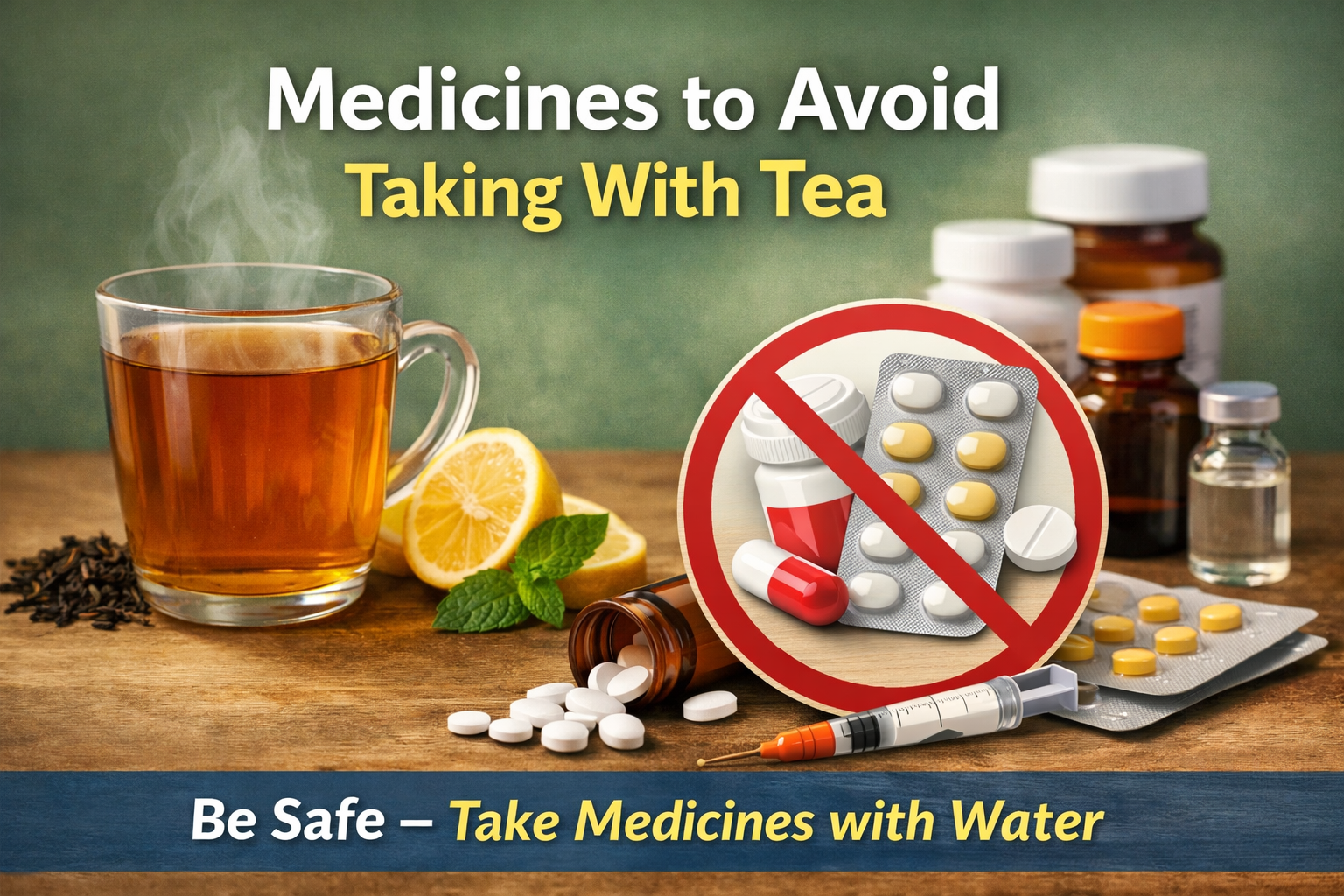
Tea is one of the most commonly consumed beverages worldwide. Many people habitually take their medicines with tea without realizing that it can reduce drug absorption, delay action, or cause side effects. Understanding which medicines should not be taken with tea is essential for safe and effective treatment.
This article explains medicines to avoid taking with tea, why this interaction occurs, and safer alternatives.
Why Should Medicines Not Be Taken With Tea?
Tea contains several active compounds such as:
- Tannins
- Caffeine
- Polyphenols
These substances can:
- Bind with medicines and reduce absorption
- Delay drug action
- Increase side effects like palpitations or stomach irritation
As a result, the medicine may not work as intended.
Medicines You Should Avoid Taking With Tea
1. Iron Supplements
Examples: Ferrous sulfate, ferrous fumarate
Tea contains tannins that strongly bind to iron, reducing its absorption by up to 60–70%.
Effect:
- Poor response to iron therapy
- Persistent anemia
Safer option: Take iron with plain water or citrus juice.
2. Antibiotics
Examples: Ciprofloxacin, Levofloxacin, Tetracycline
Tea can interfere with the absorption of certain antibiotics.
Effect:
- Reduced antibiotic effectiveness
- Risk of incomplete infection treatment
Tip: Take antibiotics with plain water and avoid tea for at least 1–2 hours.
3. Thyroid Medicines
Examples: Levothyroxine
Tea can significantly decrease thyroid hormone absorption.
Effect:
- Poor control of hypothyroidism
- Persistent symptoms like fatigue and weight gain
Best practice: Take on an empty stomach with water only.
4. Heart and Blood Pressure Medicines
Examples: Propranolol, Atenolol
Caffeine in tea can counteract the effects of some heart medicines.
Effect:
- Increased heart rate
- Reduced blood pressure control
5. Anti-Anxiety and Sleep Medicines
Examples: Diazepam, Alprazolam
Caffeine reduces the calming effect of these drugs.
Effect:
- Reduced sedation
- Anxiety or insomnia
6. Antidepressants
Examples: MAO inhibitors, SSRIs
Tea’s caffeine may increase side effects such as nervousness and palpitations.
7. Painkillers
Examples: Aspirin, Paracetamol
Tea can irritate the stomach lining when taken with painkillers.
Effect:
- Gastric irritation
- Increased risk of acidity
8. Diabetes Medicines
Examples: Metformin, Glimepiride
Tea may alter blood sugar levels and affect drug absorption.
Effect:
- Fluctuating blood glucose
- Reduced drug effectiveness
How Long Should You Wait Between Tea and Medicines?
- Before medicine: Avoid tea at least 1 hour before
- After medicine: Wait 1–2 hours before drinking tea
What Is the Safest Liquid to Take Medicines With?
✔ Plain water (best option)
✔ Lukewarm water
✖ Tea
✖ Coffee
✖ Milk (for some medicines)
Frequently Asked Questions (FAQs)
Can green tea also affect medicines?
Yes. Green tea contains polyphenols and caffeine, which can interfere with several medications.
Is herbal tea safe with medicines?
Not always. Some herbal teas may interact with drugs. Always consult your doctor.
Can I take tea after all medicines?
Some medicines are safe, but many are not. Water is always the safest choice.
Final Thoughts
Taking medicines with tea may seem harmless, but it can reduce treatment effectiveness and cause avoidable health issues. For best results, always take medicines with plain water unless advised otherwise by your healthcare provider.
Educating patients about medicine-food interactions is a simple yet powerful step toward better health outcomes.