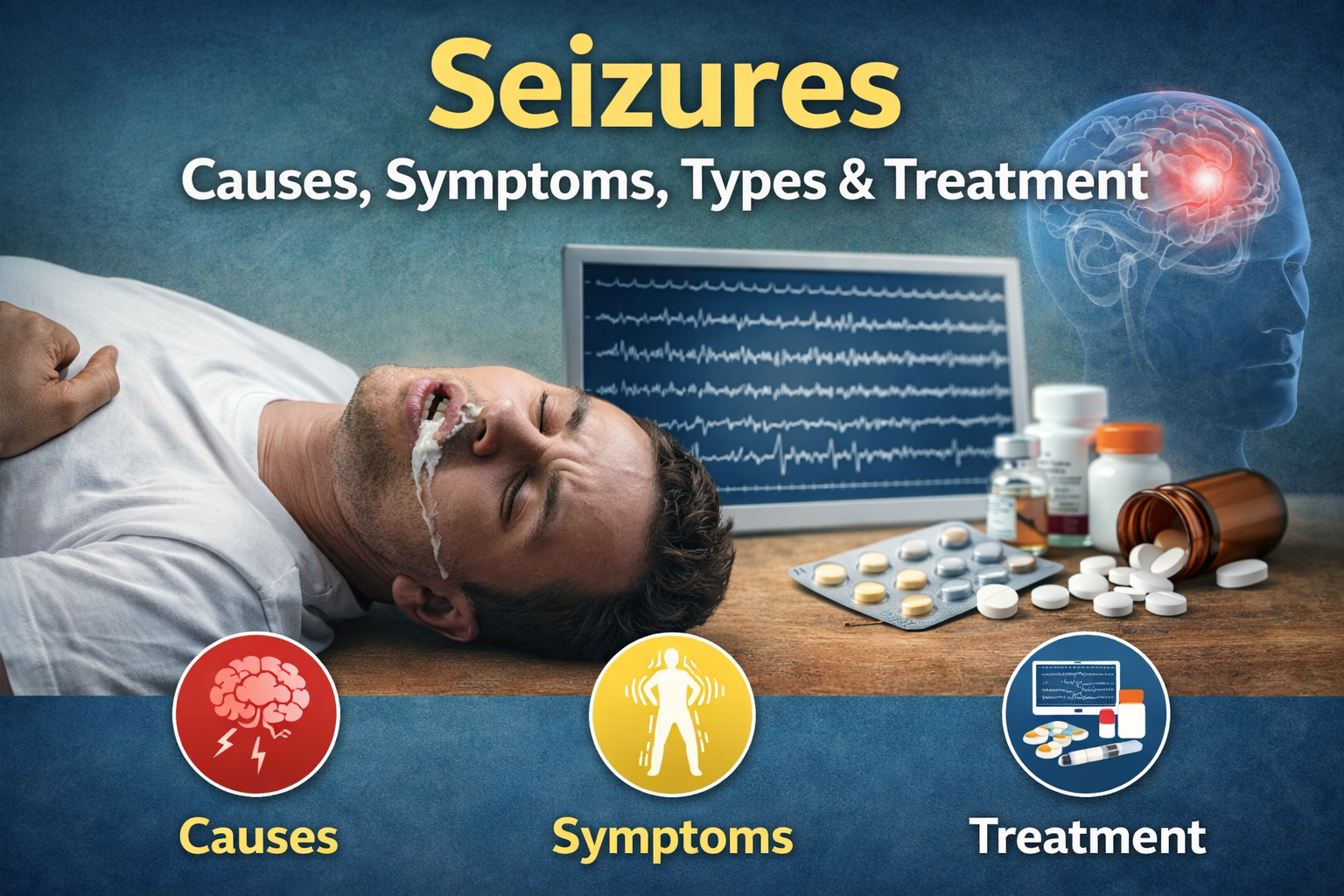
Seizures are a common neurological condition that can affect people of all ages. While a seizure can be frightening to witness, understanding its causes, symptoms, and treatment options can help patients and caregivers manage the condition effectively.
This article provides a complete overview of seizures, their types, warning signs, diagnosis, and modern treatment options.
What Are Seizures?
A seizure is a sudden, uncontrolled electrical disturbance in the brain. It can cause changes in behavior, movements, feelings, or levels of consciousness. Seizures may occur once in a lifetime or repeatedly as part of a chronic condition known as epilepsy.
Common Causes of Seizures
Seizures can occur due to various medical and lifestyle-related factors, including:
- Epilepsy
- High fever (especially in children)
- Head injury or brain trauma
- Stroke
- Brain infections (meningitis, encephalitis)
- Low blood sugar (hypoglycemia)
- Electrolyte imbalance
- Alcohol or drug withdrawal
- Brain tumors
- Genetic factors
Sometimes, the exact cause of a seizure cannot be identified.
Types of Seizures
1. Focal (Partial) Seizures
These seizures start in one area of the brain.
- Focal aware seizures: Person remains conscious
- Focal impaired awareness seizures: Altered consciousness or confusion
2. Generalized Seizures
These affect both sides of the brain.
- Tonic-clonic seizures: Loss of consciousness, stiffening, and jerking movements
- Absence seizures: Brief staring spells, common in children
- Myoclonic seizures: Sudden muscle jerks
- Atonic seizures: Sudden loss of muscle tone, causing falls
Signs and Symptoms of Seizures
Symptoms vary depending on seizure type but may include:
- Sudden jerking movements
- Loss of consciousness
- Staring spells
- Confusion after the episode
- Drooling or frothing
- Tongue biting
- Loss of bladder or bowel control
Diagnosis of Seizures
To diagnose seizures, doctors may recommend:
- Detailed medical history
- Physical and neurological examination
- Electroencephalogram (EEG)
- Brain imaging (CT scan or MRI)
- Blood tests
Accurate diagnosis helps in choosing the right treatment.
Treatment Options for Seizures
1. Anti-Seizure Medications
Most patients achieve good control with medicines such as:
- Valproate
- Levetiracetam
- Carbamazepine
- Phenytoin
Regular intake and follow-up are essential.
2. Lifestyle Management
- Adequate sleep
- Stress reduction
- Avoiding alcohol
- Regular meals to prevent low blood sugar
3. Surgery or Advanced Therapies
In resistant cases:
- Epilepsy surgery
- Vagus nerve stimulation
- Ketogenic diet (especially in children)
First Aid During a Seizure
✔ Stay calm
✔ Lay the person on their side
✔ Remove sharp objects nearby
✔ Do NOT put anything in the mouth
✔ Do NOT restrain movements
✔ Seek medical help if seizure lasts more than 5 minutes
Can Seizures Be Prevented?
Not all seizures can be prevented, but good control is possible with:
- Regular medication
- Avoiding known triggers
- Managing underlying conditions
- Regular medical follow-up
When to See a Doctor?
Seek medical attention if:
- It is the first seizure
- Seizures occur repeatedly
- Seizure lasts longer than 5 minutes
- Injury occurs during seizure
Final Thoughts
Seizures are a manageable medical condition with proper diagnosis, treatment, and lifestyle adjustments. Early medical care and patient education play a vital role in improving quality of life and reducing complications.
If you or a loved one experiences seizures, timely consultation with a healthcare professional is essential.