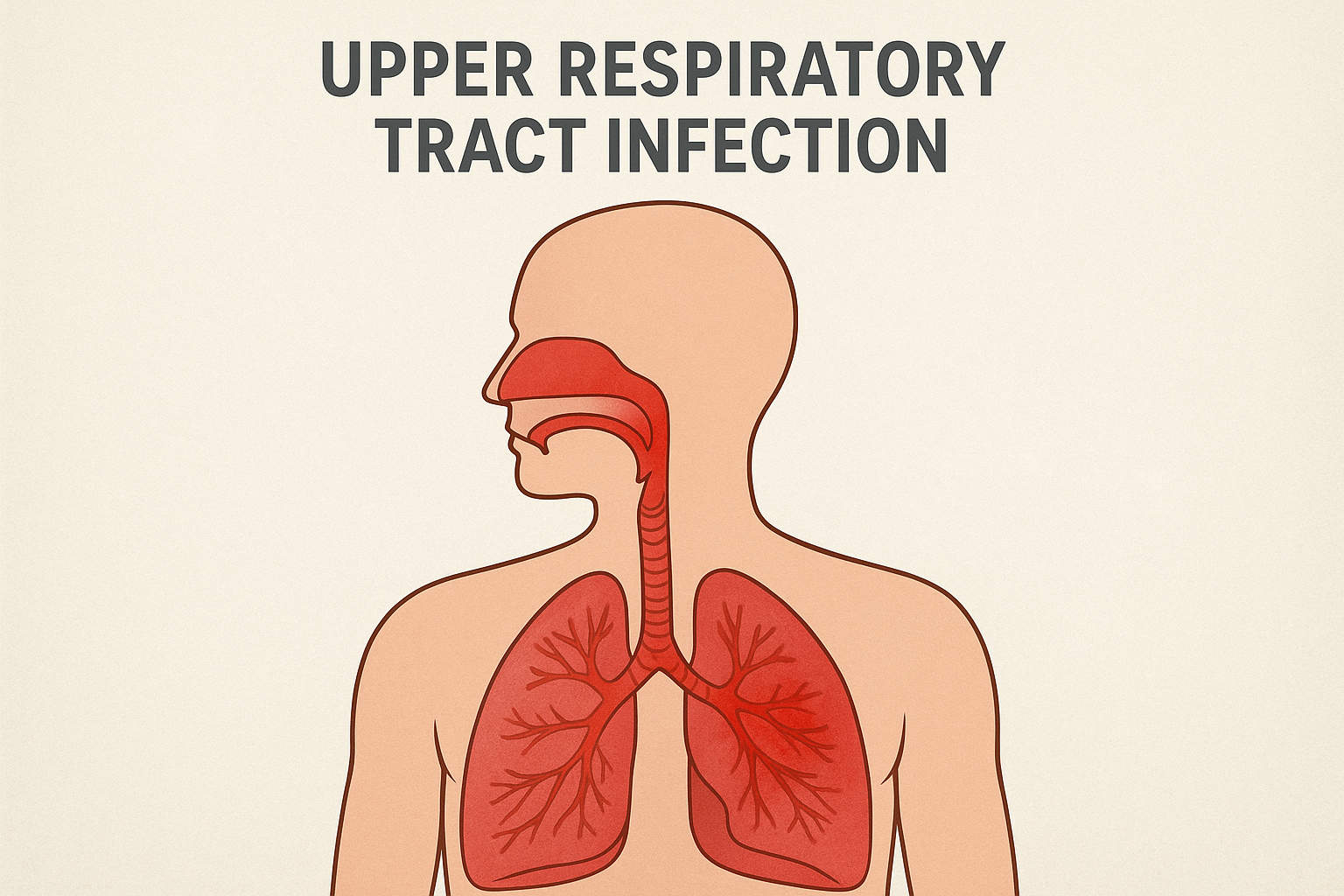
Upper Respiratory Tract Infection (URTI) is among the most common illnesses affecting people worldwide, especially during seasonal changes. It involves the infection of the nose, throat, sinuses, and upper airways. While most cases are mild and self-limiting, URTIs can cause significant discomfort and, in some instances, lead to complications if not properly managed. Understanding its causes, symptoms, and prevention is essential for maintaining good respiratory health.
What is an Upper Respiratory Tract Infection (URTI)?
A URTI refers to an infection that affects the upper part of the respiratory system, including:
- Nose
- Sinuses
- Pharynx (throat)
- Larynx (voice box)
These infections are mostly viral, though bacteria may occasionally be involved.
Common Types of Upper Respiratory Tract Infections
- Common Cold – Characterized by nasal congestion, sneezing, sore throat, and mild cough.
- Pharyngitis – Inflammation of the throat, often leading to pain or difficulty swallowing.
- Tonsillitis – Infection of the tonsils, causing sore throat, fever, and swollen glands.
- Sinusitis – Inflammation of the sinuses leading to facial pain, pressure, and nasal discharge.
- Laryngitis – Inflammation of the voice box, resulting in hoarseness or loss of voice.
Causes of URTI
URTIs are primarily caused by viruses, such as:
- Rhinovirus
- Adenovirus
- Influenza virus
- Coronavirus
- Parainfluenza virus
Occasionally, bacterial infections (like Streptococcus pyogenes) can cause throat infections.
Risk Factors
Certain factors increase susceptibility to URTIs:
- Poor immunity
- Exposure to infected individuals
- Smoking or exposure to second-hand smoke
- Air pollution and allergens
- Cold or dry weather
- Poor hygiene or lack of handwashing
Symptoms of Upper Respiratory Tract Infection
Typical symptoms include:
- Runny or stuffy nose
- Sore throat
- Sneezing and coughing
- Mild fever
- Headache
- Fatigue and body aches
- Hoarseness of voice
In children, symptoms may also include irritability, reduced appetite, and difficulty sleeping.
Diagnosis
Most URTIs are diagnosed based on clinical symptoms and physical examination.
However, in severe or prolonged cases, doctors may recommend:
- Throat swab for bacterial culture
- Rapid antigen test for strep throat
- Blood tests if infection is persistent or complicated
Treatment of URTI
Treatment depends on whether the infection is viral or bacterial.
1. For Viral Infections:
- Most cases resolve on their own within 7–10 days.
- Home remedies and supportive care are usually sufficient:
- Rest and adequate hydration
- Warm saltwater gargles
- Steam inhalation for congestion
- Over-the-counter medications for fever, pain, or nasal blockage
2. For Bacterial Infections:
- If bacterial infection (like strep throat) is confirmed, antibiotics may be prescribed.
- Avoid using antibiotics without medical advice, as this promotes antibiotic resistance.
3. Severe or Recurrent Cases:
- Medical evaluation is necessary to rule out underlying causes such as allergies, sinus blockage, or chronic infections.
Prevention of Upper Respiratory Tract Infections
Simple preventive steps can reduce the risk of URTIs:
- Wash hands frequently
- Avoid touching your face, nose, or mouth unnecessarily
- Maintain distance from people with cold or flu symptoms
- Keep your surroundings clean and ventilated
- Stay hydrated and eat a balanced diet
- Get vaccinated against influenza and other respiratory illnesses
- Quit smoking and avoid polluted environments
When to See a Doctor
Consult a doctor if you experience:
- High or persistent fever
- Shortness of breath
- Ear pain or sinus tenderness
- Cough lasting more than 2 weeks
- Blood in sputum or severe throat pain
Conclusion
Upper Respiratory Tract Infections are usually mild but can cause significant discomfort. Proper rest, hydration, and hygiene practices help in faster recovery and prevention. Understanding the difference between viral and bacterial infections ensures the right treatment approach. Always seek medical advice for prolonged or severe symptoms.