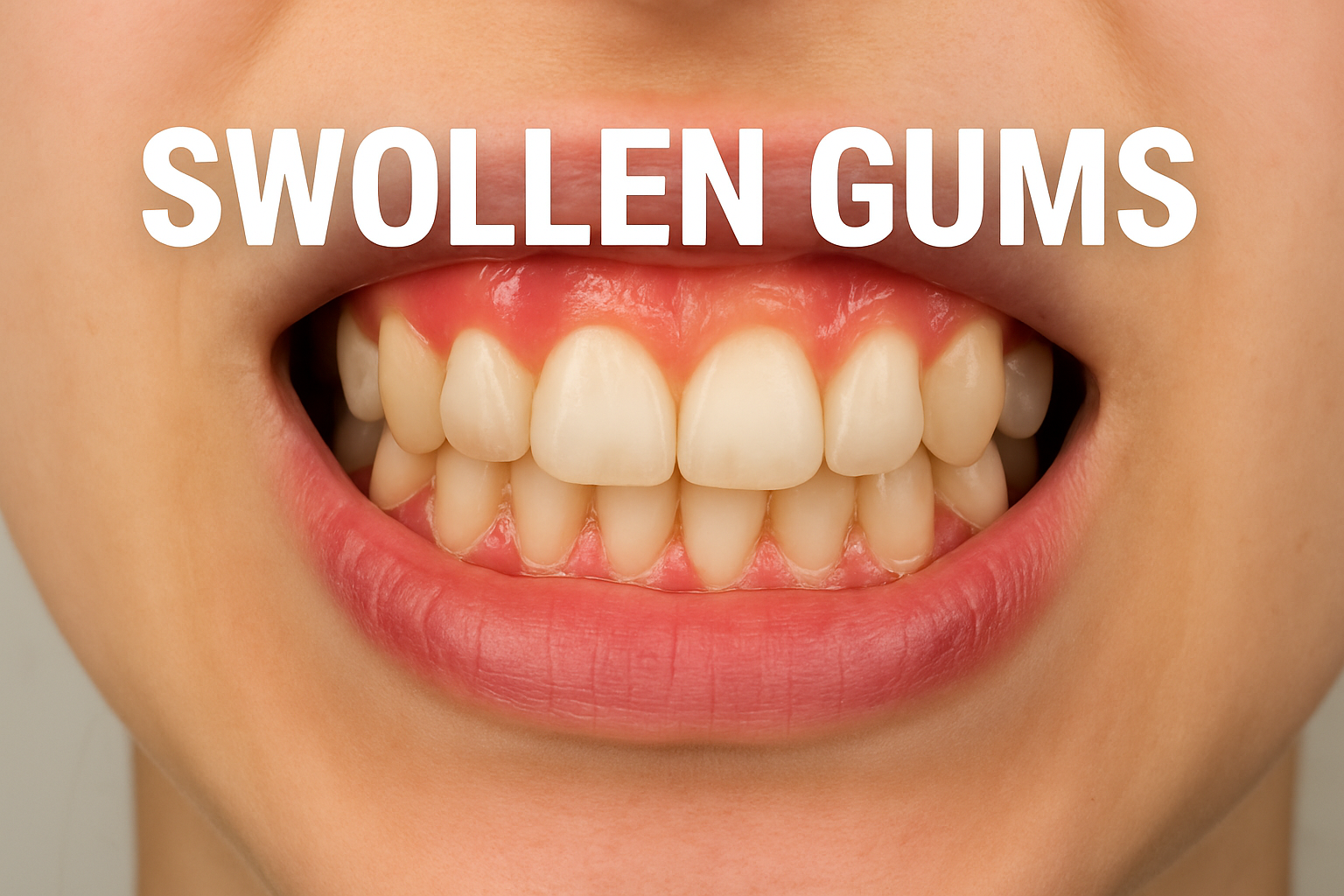
Swelling gums, also known as gingival swelling, are a common dental problem that can occur due to infection, inflammation, or poor oral hygiene. Swollen gums may feel tender, painful, or bleed easily, and if not treated on time, they can lead to gum disease, tooth loss, and other complications.
This blog covers the causes, symptoms, treatment options, and prevention of swollen gums in a clear and educational way.
What Are Swelling Gums?
Swelling gums occur when the soft tissue around the teeth becomes inflamed. This condition is often caused by bacteria build-up, infections, or irritation. The gums appear red, puffy, and may feel sore while eating or brushing.
Swollen gums can affect one tooth, several teeth, or the whole mouth.
Common Causes of Swollen Gums
Understanding the root cause is essential for accurate treatment. Some of the most common causes include:
1. Gingivitis
The early stage of gum disease caused by plaque build-up. It leads to red, swollen, and bleeding gums.
2. Periodontitis
An advanced gum infection that causes deeper inflammation, bone loss, and severe swelling.
3. Poor Oral Hygiene
Not brushing or flossing regularly allows bacteria to grow and irritate the gums.
4. Vitamin Deficiency (Especially Vitamin C & B)
Lack of essential vitamins can weaken gum health.
5. Dental Infections
Infections around the tooth root or in the gum tissue cause swelling and pain.
6. Hormonal Changes
Pregnancy, menstruation, or puberty can make gums more sensitive and swollen.
7. Ill-Fitting Dentures or Braces
These can irritate the gum tissue.
8. Allergic Reactions
Mouthwash, toothpaste, or dental materials may trigger gum irritation.
9. Medications
Some medications can cause gum overgrowth or swelling.
Symptoms of Swollen Gums
Common signs include:
- Red, swollen, or puffy gums
- Bleeding while brushing or flossing
- Tenderness or pain
- Bad breath (halitosis)
- Receding gums
- Loose teeth (in severe cases)
- Pus around the gums (sign of infection)
Treatment Options for Swollen Gums
Treatment depends on the cause and severity. The most common treatments include:
✔ Professional Dental Cleaning
A dentist removes plaque and tartar build-up to reduce inflammation.
✔ Scaling and Root Planing
Deep cleaning to treat gum disease and remove bacteria below the gumline.
✔ Antibiotics
For bacterial infections or gum abscess.
✔ Mouth Rinses
Antibacterial or saltwater rinses help reduce swelling and kill bacteria.
✔ Vitamin Supplements
Vitamin C and B-complex supplements improve gum health.
✔ Treating Underlying Issues
Correcting braces, dentures, or adjusting dental restorations.
Home Remedies for Temporary Relief
These remedies help reduce swelling but should not replace dental treatment:
- Warm salty water rinses
- Cold compress on cheeks
- Good oral hygiene
- Avoiding tobacco and alcohol
- Using a soft-bristled toothbrush
How to Prevent Swollen Gums
Prevention plays a key role in maintaining gum health:
- Brush twice daily with fluoride toothpaste
- Floss every day
- Visit the dentist every 6 months
- Eat a balanced diet rich in vitamins
- Avoid smoking and alcohol
- Stay hydrated
- Keep dentures and braces clean
When to See a Dentist
Seek dental care if you experience:
- Persistent gum swelling
- Bleeding gums for more than 2–3 days
- Severe pain
- Pus around the gums
- Loose teeth
- Fever or foul breath
These symptoms may indicate a serious infection requiring immediate treatment.
Conclusion
Swelling gums can be uncomfortable and troubling, but with timely care and proper oral hygiene, the condition can be easily treated and prevented. Regular dental visits and a healthy lifestyle are the foundation of strong gums and a healthy smile.