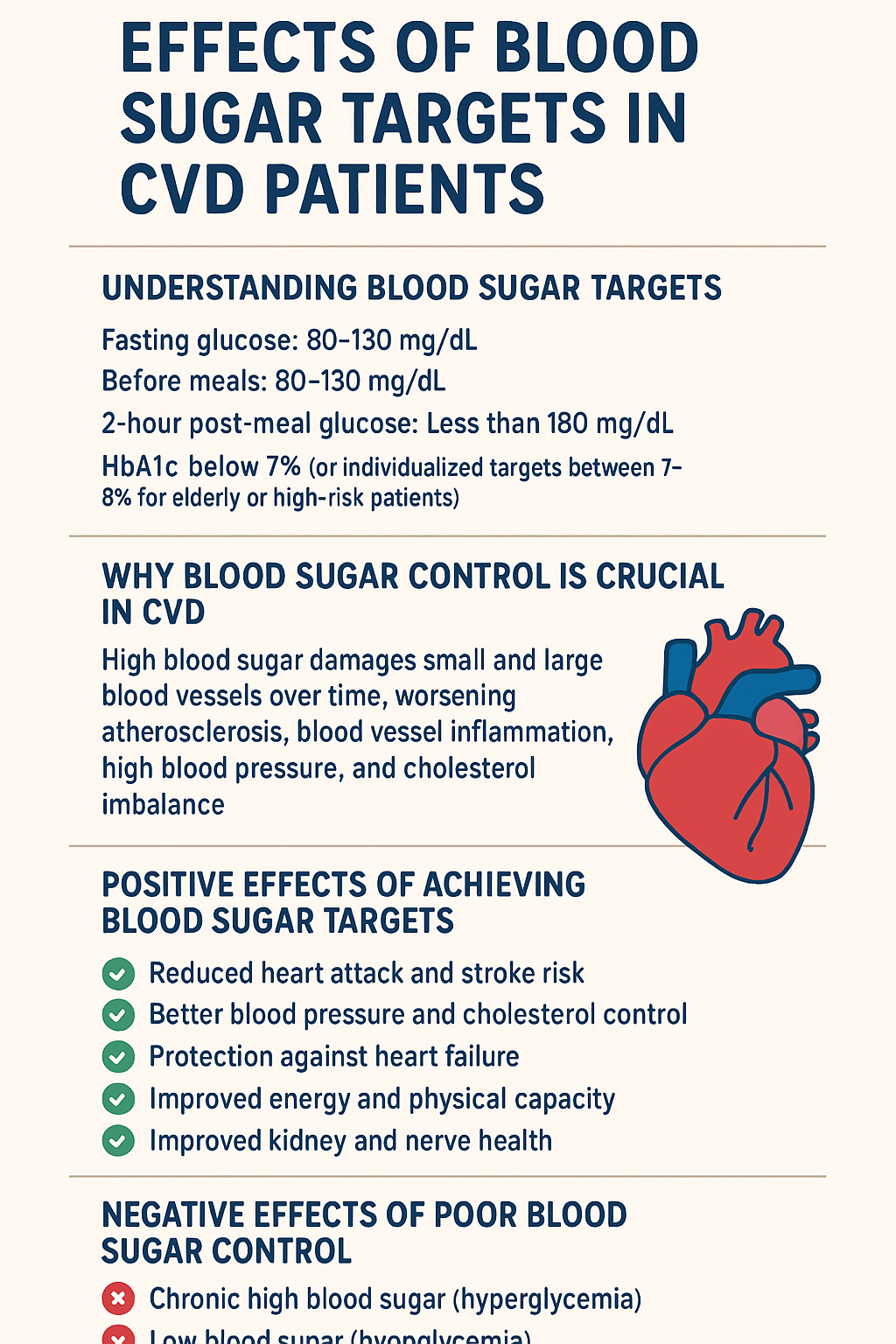
Cardiovascular diseases (CVDs) remain one of the leading causes of death worldwide. For patients living with heart disease—especially those who also have diabetes or prediabetes—maintaining proper blood sugar targets is essential. Balanced glucose control plays a direct role in protecting the heart, blood vessels, kidneys, and overall health.
In this article, we explore the effects of achieving blood sugar targets in CVD patients, why these goals matter, and how careful glucose management can reduce complications and improve quality of life.
Understanding Blood Sugar Targets in CVD Patients
Blood sugar targets are recommended glucose ranges set by healthcare experts to minimize both hyperglycemia (high sugar) and hypoglycemia (low sugar) while improving heart safety in people with cardiovascular conditions.
General recommended targets are:
- Fasting glucose: 80–130 mg/dL
- Before meals: 80–130 mg/dL
- 2-hour post-meal glucose: Less than 180 mg/dL
- HbA1c: Below 7% (or individualized targets between 7–8% for elderly or high-risk patients)
Targets may vary based on age, heart function, medication type, kidney status, and history of low-sugar episodes.
Why Blood Sugar Control Is Crucial in CVD
High blood sugar damages small and large blood vessels over time, worsening:
- Atherosclerosis (plaque buildup in arteries)
- Blood vessel inflammation
- High blood pressure
- Cholesterol imbalance
This accelerates complications such as heart attacks, strokes, heart failure, and peripheral artery disease.
Positive Effects of Achieving Blood Sugar Targets
✅ 1. Reduced Heart Attack & Stroke Risk
Keeping glucose levels within range:
- Slows plaque formation
- Improves blood vessel flexibility
- Reduces clot formation
This lowers the risk of acute cardiovascular events.
✅ 2. Better Blood Pressure & Cholesterol Control
Stable blood sugar improves insulin sensitivity, which helps regulate:
- LDL cholesterol
- Triglyceride levels
- Blood pressure
These combined improvements reduce overall cardiac strain.
✅ 3. Protection Against Heart Failure
High sugar levels cause oxidative stress and muscle inflammation within cardiac tissue. Controlled glucose:
- Preserves heart muscle function
- Prevents fluid retention
- Delays progression of heart failure
✅ 4. Improved Energy & Physical Capacity
Patients with stable sugar levels experience:
- Less fatigue
- Improved exercise tolerance
- Reduced breathlessness
This supports safer cardiac rehabilitation and physical activity.
✅ 5. Improved Kidney & Nerve Health
Proper sugar control also reduces:
- Diabetic kidney disease risk
- Peripheral neuropathy
Healthy kidneys further support blood-pressure control—critical for heart protection.
Negative Effects of Poor Blood Sugar Control in CVD Patients
❌ Chronic High Blood Sugar (Hyperglycemia)
Ongoing hyperglycemia may cause:
- Rapid progression of heart disease
- Increased arterial stiffness
- Higher blood clot tendency
- Kidney and nerve damage
- Frequent hospitalizations
High glucose is strongly associated with repeated heart attacks and higher CVD mortality.
❌ Low Blood Sugar (Hypoglycemia)
Overly strict control or medication imbalance may result in hypoglycemia:
- Palpitations and chest discomfort
- Dizziness or fainting
- Dangerous heart rhythm disturbances
- Increased risk of sudden cardiac death in vulnerable patients
The Role of HbA1c in CVD Patients
HbA1c shows the average blood sugar level over the previous 2–3 months and is a key predictor of cardiovascular outcomes.
Safe HbA1c targets:
- <7% for most adults
- 7–8% in older adults or patients with advanced heart disease to avoid hypoglycemia
Research consistently shows that each 1% reduction in HbA1c significantly lowers cardiovascular risk.
Safe Strategies for Maintaining Blood Sugar Targets
✔ Regular Monitoring
Use glucometers or Continuous Glucose Monitoring (CGM) to spot dangerous trends early.
✔ Heart-Healthy Diet
- Limit refined sugars and processed carbs
- Increase whole grains, vegetables, nuts, and lean proteins
- Reduce saturated fat and salt
✔ Physical Activity
Moderate walking or supervised exercise improves:
- Glucose control
- Heart circulation
- Weight management
✔ Medication Adherence
Follow medication plans prescribed by your cardiologist and endocrinologist. Some modern antidiabetic medications also offer protective benefits for the heart.
✔ Stress, Sleep & Lifestyle
- Manage stress to avoid blood-sugar spikes.
- Maintain consistent sleep patterns.
- Quit smoking and limit alcohol use.
The Importance of Personalized Targets
Not all CVD patients require the same glucose goals. Individual targets depend on:
- Age
- Type of heart disease
- Kidney health
- Risk of hypoglycemia
- Medication regimen
Your healthcare provider tailors targets to provide heart safety without increasing low-sugar risks.
Conclusion
The effects of blood sugar targets in cardiovascular disease patients are profound. Achieving balanced glucose levels protects blood vessels, stabilizes heart rhythm, reduces heart-attack risk, prevents kidney damage, and improves overall quality of life.
The goal is not extreme sugar lowering but safe, consistent control tailored to each patient’s cardiovascular status.
Final Words
For individuals with heart disease, blood sugar management is more than diabetes care—it is a powerful form of heart protection. With regular monitoring, lifestyle changes, and proper medical guidance, healthy glucose targets offer a pathway to longer life and stronger heart health.