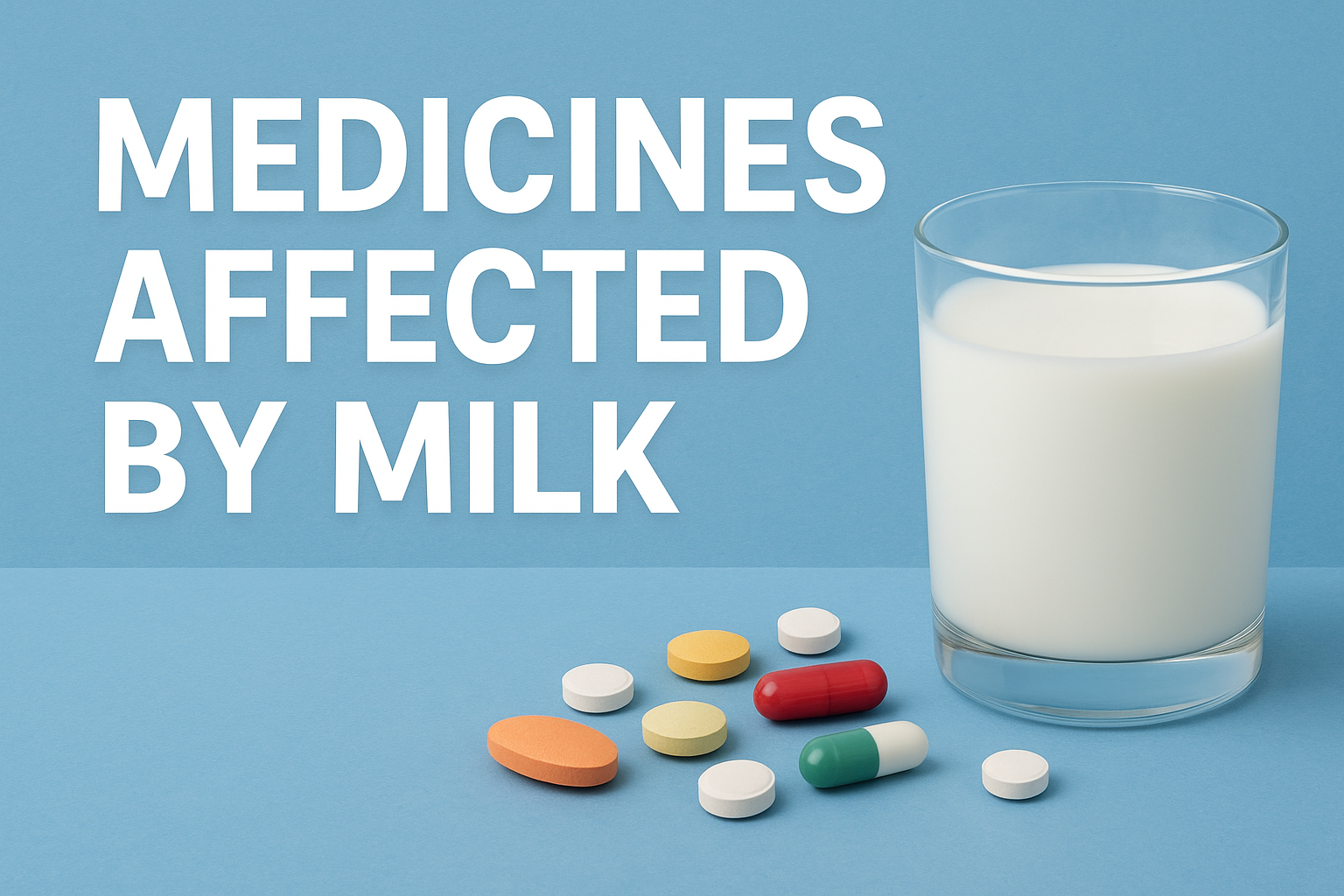
Milk is a nutritious drink, but when taken with certain medicines, it can reduce their absorption and effectiveness. Many people are unaware that the calcium and proteins in milk can interfere with the way some medicines work. This blog explains which medicines are affected by milk, why milk causes interaction, and how to take your medicines safely.
Why Does Milk Affect Medicine Absorption?
Milk contains:
- Calcium
- Magnesium
- Casein (milk proteins)
These components can bind with specific medicines in the stomach and intestines, forming insoluble complexes.
As a result:
- The medicine is not absorbed properly
- The treatment becomes less effective
- The dose may feel like it is “not working”
This interaction is medically called chelation.
Medicines Affected by Milk – With Names
Below are the major categories and examples of medicines that should not be taken with milk.
1. Antibiotics (Most Common Interaction)
a. Tetracycline Group
These antibiotics form strong complexes with milk calcium.
Examples:
- Tetracycline
- Doxycycline
- Minocycline
- Oxytetracycline
Effect:
Milk reduces their absorption by 40–80%, making infection treatment weaker.
b. Fluoroquinolones (Quinolone Antibiotics)
Calcium in milk significantly reduces their uptake.
Examples:
- Ciprofloxacin
- Levofloxacin
- Ofloxacin
- Norfloxacin
- Moxifloxacin (less affected but still advised to avoid milk)
Effect:
Reduced antibiotic levels → slower healing and possible treatment failure.
2. Thyroid Medicines
Levothyroxine
Used for hypothyroidism.
Effect:
Milk decreases absorption by up to 30%, causing:
- Persistent fatigue
- Fluctuating thyroid levels
- Ineffective treatment
3. Iron Supplements
Iron reacts with milk calcium.
Examples:
- Ferrous sulfate
- Ferrous fumarate
- Ferrous gluconate
Effect:
Reduced iron absorption → poor hemoglobin response.
4. Bisphosphonates (For Osteoporosis)
Alendronate, Risedronate
These medications require an empty stomach, and milk completely stops their absorption.
5. Certain Antifungal Medicines
Itraconazole (Capsule Form)
Milk reduces acidity in the stomach, affecting absorption.
6. Some Blood Pressure Medicines
ACE Inhibitors & Calcium Channel Blockers
Milk can delay or decrease absorption in a few cases, especially:
- Enalapril
- Verapamil
(Not severe but still is better to avoid taking with milk.)
How Long to Avoid Milk Before & After Taking These Medicines?
To prevent interactions:
Take medicine
- 1–2 hours before milk, OR
- 2–3 hours after milk
Especially important for:
- Antibiotics
- Thyroid medicine
- Iron supplements
Who Should Be Extra Careful?
- Children on antibiotics
- Diabetic patients taking levothyroxine
- Pregnant women taking iron tablets
- Elderly patients using multiple medicines
Safe Tips for Taking Medicines With Milk
✔ Drink water instead of milk when swallowing tablets
✔ Take milk at a different time of the day
✔ Check the leaflet of antibiotics
✔ Ask your doctor or pharmacist if unsure
✔ Avoid mixing medicines into milk for children unless approved by a doctor
Conclusion
Milk is healthy but can interfere with the absorption of several commonly used medicines, especially antibiotics, thyroid medicines, iron supplements, and osteoporosis medicines. Understanding these interactions helps ensure your treatment works effectively and safely.