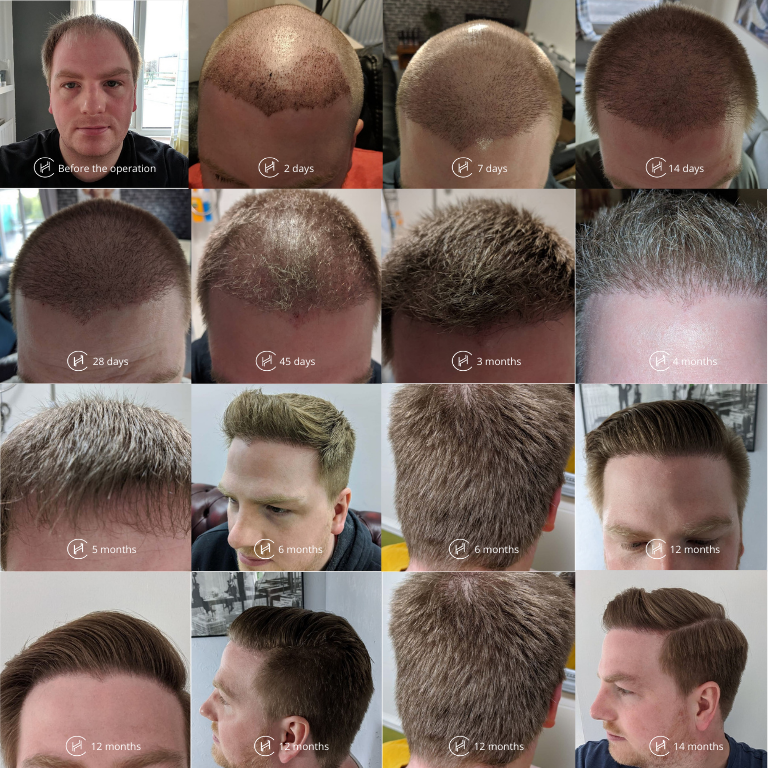
Hair transplantation is a permanent and effective solution for people suffering from hair loss and baldness. With advances in medical technology, several techniques are now available that provide natural-looking, long-lasting results with minimal discomfort. Understanding the different types of hair transplantation can help you choose the most suitable option for your hair restoration journey.
What Is Hair Transplantation?
Hair transplantation is a surgical procedure where healthy hair follicles are moved from a donor area (usually the back of the scalp) to thinning or bald areas. These transplanted follicles continue growing permanently because they are genetically resistant to hair loss.
Main Types of Hair Transplantation
✅ 1. FUT – Follicular Unit Transplantation (Strip Method)
FUT is the traditional hair transplant method.
Procedure:
- A thin strip of scalp is removed from the donor area.
- Hair follicles are separated under a microscope.
- Follicles are implanted into bald or thinning areas.
- The donor area is closed with stitches.
Advantages:
✔ Suitable for large bald areas
✔ More grafts in a single session
✔ Lower cost than some modern methods
Limitations:
✖ Leaves a linear scar
✖ Longer healing time
✅ 2. FUE – Follicular Unit Extraction
FUE is the most popular modern hair transplant technique.
Procedure:
- Individual hair follicles are directly extracted from the donor area.
- Grafts are implanted one by one into recipient areas.
- No stitches are required.
Advantages:
✔ No visible linear scar
✔ Faster healing
✔ Minimal pain
✔ Natural-looking hairline
Limitations:
✖ Slightly higher cost
✖ Procedure takes longer for large sessions
✅ 3. DHI – Direct Hair Implantation
DHI is an advanced version of FUE that uses special implanter pens.
Procedure:
- Follicles are extracted as in FUE.
- Hair follicles are implanted directly using a Choi pen without making prior incisions.
Advantages:
✔ Higher graft survival rate
✔ Precise hair placement
✔ Dense and natural hairline
✔ Minimal scalp trauma
Limitations:
✖ More expensive than FUE
✖ Best for small to medium areas
✅ 4. Sapphire FUE
Sapphire FUE uses sapphire blades instead of steel instruments for making recipient sites.
Advantages:
✔ More accurate incisions
✔ Faster healing
✔ Reduced scarring and swelling
✔ Higher graft density
Limitations:
✖ Higher cost than standard FUE
✅ 5. Robotic Hair Transplantation
This method uses robot-assisted devices to perform follicle extraction with maximum precision.
Advantages:
✔ Reduced human error
✔ High consistency
✔ Minimal tissue damage
Limitations:
✖ Very high cost
✖ Limited availability
Comparison of Hair Transplant Techniques
| Method | Scar | Healing | Graft Survival | Cost |
|---|---|---|---|---|
| FUT | Linear scar | Moderate | Good | Low |
| FUE | Tiny dots | Fast | Very good | Medium |
| DHI | Tiny dots | Fastest | Excellent | High |
| Sapphire FUE | Tiny dots | Very fast | Excellent | Medium-High |
| Robotic FUE | Tiny dots | Fast | Very good | Very high |
Who Is the Best Candidate?
You may benefit from hair transplantation if:
✅ You have genetic hair loss
✅ Donor hair supply is adequate
✅ Scalp health is good
✅ Hair loss is stable
Recovery and Results
- Redness & scabs last 7–10 days
- Temporary hair shedding occurs
- New hair growth begins in 3–4 months
- Full results visible at 9–12 months
Final Thoughts
With multiple hair transplant options now available, patients can choose procedures tailored to their needs, budget, and hair goals. FUE and DHI remain the most popular due to their natural results and minimal downtime. Selecting an experienced clinic and certified surgeon is essential to achieve safe, permanent, and satisfying results.
Always consult a professional to determine the most suitable technique for your hair restoration needs.