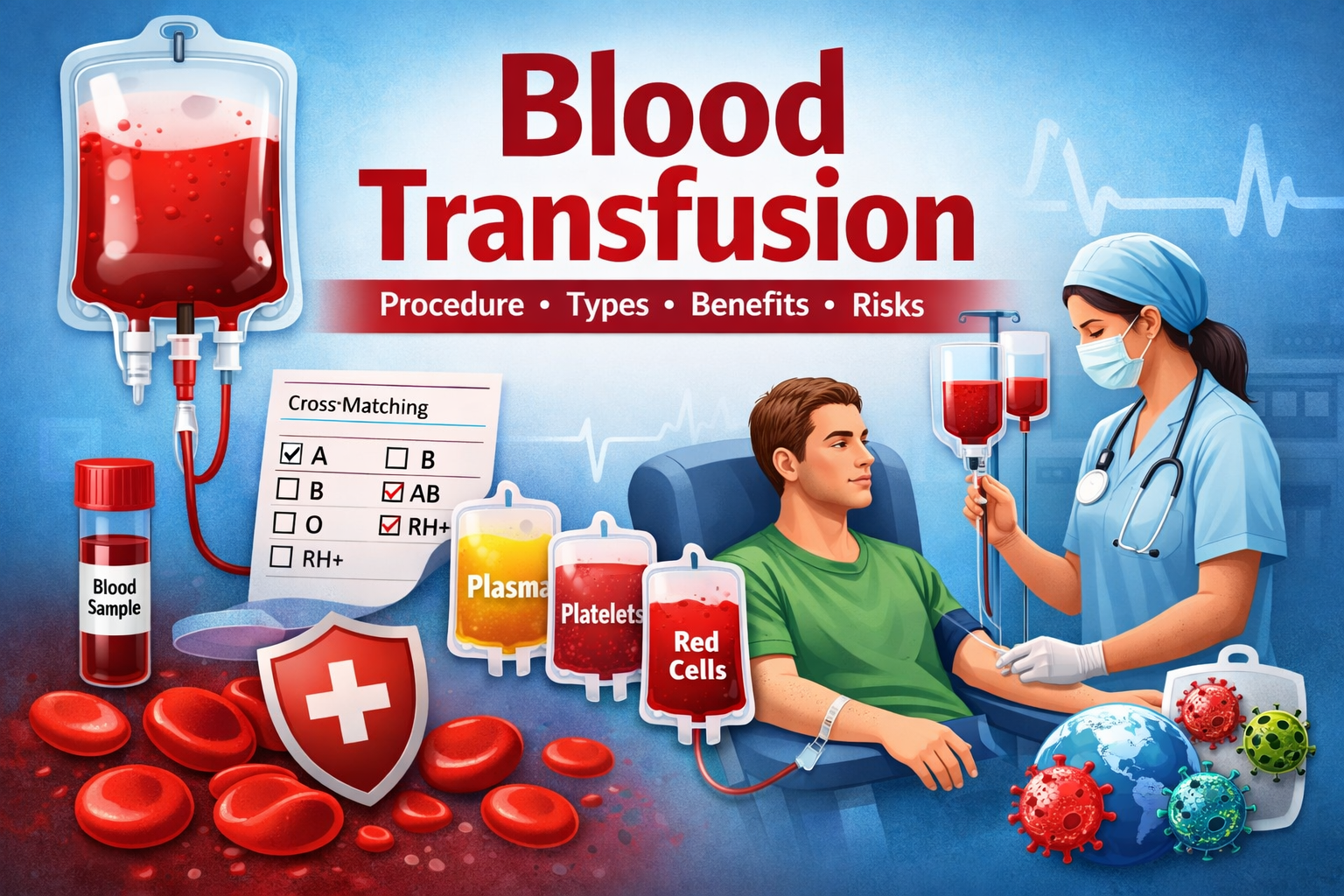
Blood transfusion is a lifesaving medical procedure in which blood or its components are transferred into a patient’s bloodstream. It is commonly used in emergencies, surgeries, severe anemia, blood loss, and chronic illnesses. Understanding blood transfusion helps patients feel informed, safe, and confident about their treatment.
What Is Blood Transfusion?
A blood transfusion involves giving blood through an intravenous (IV) line directly into a vein. The blood used is carefully tested, matched, and stored in blood banks to ensure safety and compatibility.
Why Is Blood Transfusion Needed?
Blood transfusion may be required in the following conditions:
- Severe anemia
- Excessive blood loss due to injury or surgery
- Childbirth complications
- Cancer and chemotherapy
- Blood disorders such as thalassemia or hemophilia
- Chronic kidney disease
- Major infections or burns
Types of Blood Transfusion
Different components of blood are transfused depending on the patient’s condition:
1. Red Blood Cell Transfusion
- Used to treat anemia
- Improves oxygen delivery to tissues
2. Platelet Transfusion
- Given to patients with low platelet count
- Prevents excessive bleeding
3. Plasma Transfusion
- Contains clotting factors
- Used in liver disease, burns, or bleeding disorders
4. Whole Blood Transfusion
- Used in massive blood loss
- Contains all blood components
Blood Group Compatibility
Correct blood matching is essential to prevent transfusion reactions.
| Blood Group | Can Receive From |
|---|---|
| A+ | A+, A−, O+, O− |
| B+ | B+, B−, O+, O− |
| AB+ | All blood groups |
| O− | O− only |
O negative is known as the universal donor.
Blood Transfusion Procedure
The procedure is safe and carefully monitored:
- Blood grouping and cross-matching
- Consent from the patient
- IV cannula insertion
- Slow transfusion under observation
- Monitoring vital signs before, during, and after transfusion
The process usually takes 1–4 hours, depending on the component transfused.
Benefits of Blood Transfusion
- Saves lives in emergencies
- Improves oxygen supply
- Prevents complications of severe anemia
- Supports recovery after surgery
- Enhances quality of life in chronic diseases
Possible Risks and Side Effects
Although rare, some risks include:
- Fever or chills
- Allergic reactions
- Mild itching or rash
- Fluid overload
- Transfusion reactions (very rare due to screening)
- Infection risk (extremely low with modern testing)
Safety of Blood Transfusion
Modern blood transfusion is very safe due to:
- Strict donor screening
- Testing for HIV, hepatitis B & C, syphilis, and malaria
- Proper storage and handling
- Trained medical staff
Precautions After Blood Transfusion
- Stay under observation as advised
- Report fever, breathing difficulty, or rashes immediately
- Drink adequate fluids
- Follow medical advice strictly
Frequently Asked Questions (FAQs)
Is blood transfusion painful?
No, only a minor needle prick is felt during IV insertion.
Can one donate blood frequently?
Yes, a healthy person can donate blood every 3–4 months.
Is blood transfusion safe for diabetics?
Yes, with proper monitoring and medical supervision.
Conclusion
Blood transfusion is a crucial medical procedure that saves millions of lives every year. With advanced screening and strict safety protocols, it is safer than ever. Awareness about blood transfusion helps patients overcome fear and ensures timely medical care when needed.