Hair transplantation is a popular and effective cosmetic procedure designed to treat hair loss and restore natural hair growth. With advances in medical technology, hair transplant surgery has become safe, minimally invasive, and capable of delivering long-lasting, natural-looking results. This procedure is widely chosen by both men and women experiencing hair thinning or baldness.
What Is Hair Transplantation?
Hair transplantation is a surgical technique in which healthy hair follicles are taken from a donor area (usually the back or sides of the scalp) and implanted into areas affected by hair loss. These transplanted follicles continue to grow naturally, providing permanent hair restoration.
Who Needs Hair Transplantation?
Hair transplantation may be suitable for individuals with:
- Male or female pattern baldness
- Hair thinning due to aging
- Hair loss after burns or injuries
- Hair loss from previous surgeries
- Stable hair loss with sufficient donor hair
A medical evaluation is essential before deciding on the procedure.
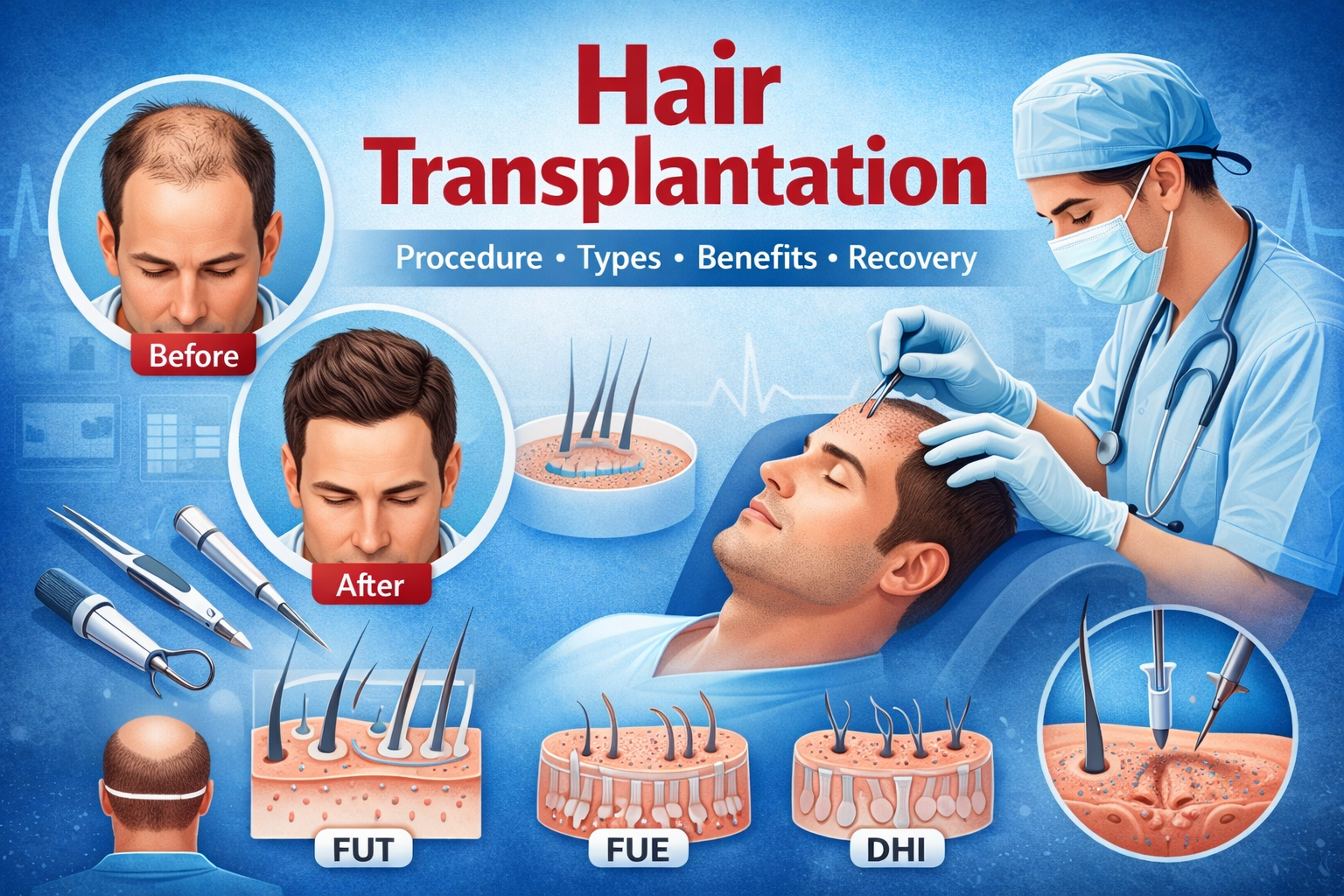
Types of Hair Transplantation
1. Follicular Unit Transplantation (FUT)
- A strip of scalp is removed from the donor area
- Hair follicles are extracted and transplanted
- Suitable for patients needing a large number of grafts
2. Follicular Unit Extraction (FUE)
- Individual hair follicles are removed directly
- No stitches required
- Faster healing and minimal scarring
3. Direct Hair Implantation (DHI)
- Advanced form of FUE
- Hair follicles are implanted immediately using a special tool
- Provides precise placement and natural density
Hair Transplant Procedure
The procedure is usually performed under local anesthesia and includes:
- Scalp cleaning and anesthesia
- Extraction of hair follicles
- Preparation of recipient area
- Implantation of follicles
- Post-procedure care instructions
The entire process may take 4–8 hours, depending on the number of grafts.
Health and Cosmetic Benefits of Hair Transplantation
1. Permanent Solution for Hair Loss
Transplanted hair follicles are resistant to hair loss and grow naturally for a lifetime.
2. Natural Appearance
Modern techniques ensure natural hairline design and hair density.
3. Boosts Self-Confidence
Improved hair coverage enhances self-esteem and social confidence.
4. Low Maintenance
Once healed, transplanted hair requires no special care beyond normal grooming.
5. Safe and Minimally Invasive
Performed under expert supervision, hair transplantation has minimal risks and downtime.
Recovery and Aftercare
- Mild swelling or redness may occur initially
- Most patients return to normal activities within a few days
- New hair growth starts after 3–4 months
- Full results are visible within 9–12 months
Following post-procedure instructions is crucial for best results.
Possible Risks and Side Effects
Hair transplantation is generally safe, but minor side effects may include:
- Temporary swelling
- Itching or discomfort
- Mild scarring (rare with FUE)
- Temporary shedding of transplanted hair
Serious complications are very rare when performed by trained professionals.
Who Is Not a Suitable Candidate?
- Individuals with uncontrolled medical conditions
- Active scalp infections
- Insufficient donor hair
- Unstable hair loss patterns
A medical consultation is necessary to determine eligibility.
Conclusion
Hair transplantation is a proven, safe, and long-lasting solution for hair loss. With modern techniques such as FUE and DHI, patients can achieve natural-looking hair growth with minimal discomfort and downtime. Consulting a qualified specialist ensures optimal results and long-term satisfaction.