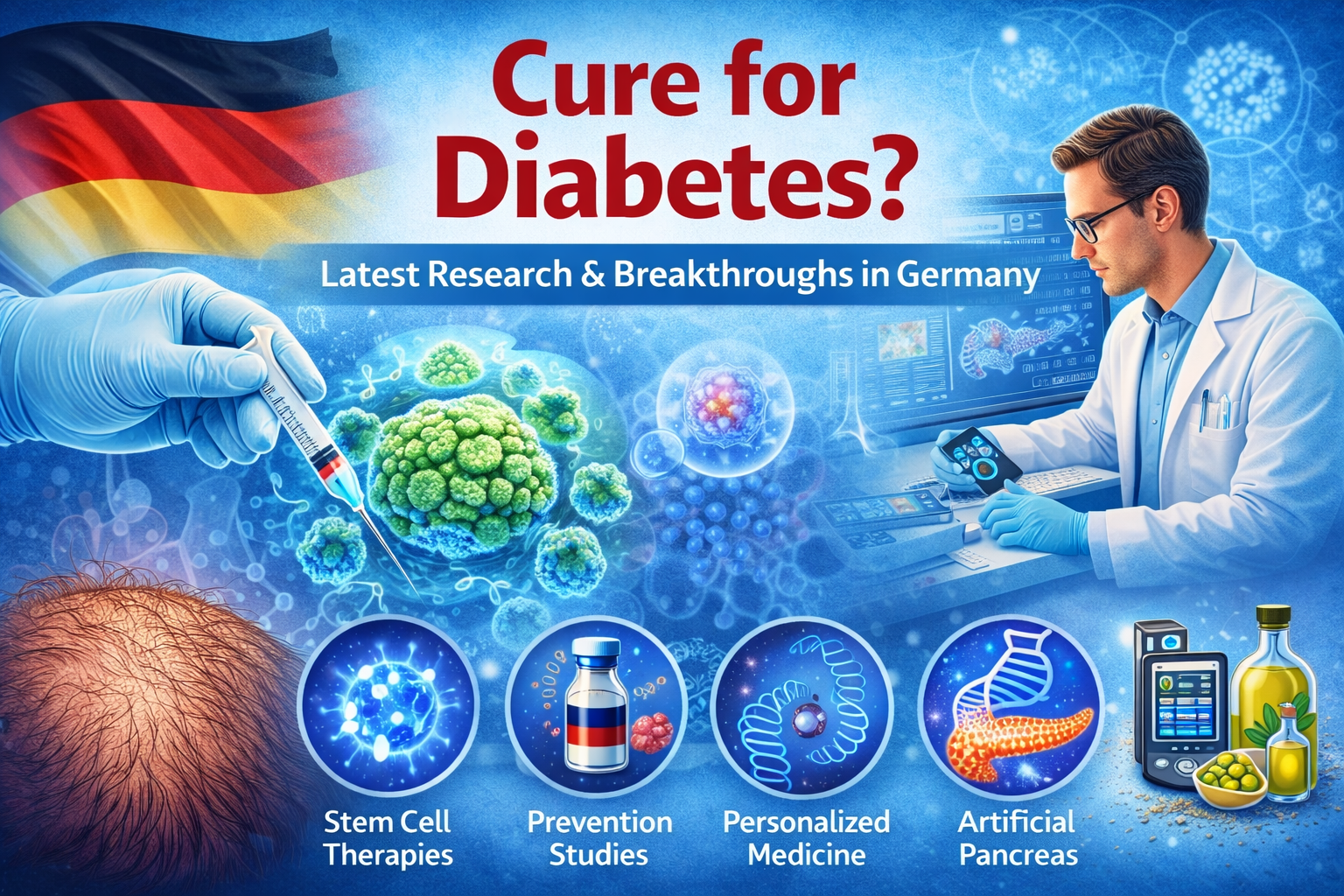
iabetes continues to be one of the most widespread chronic health conditions worldwide. While no definitive cure for diabetes exists yet, recent research—especially in Germany and Europe—offers promising new approaches that go beyond traditional blood sugar management. These developments could transform how Type 1 and Type 2 diabetes are treated in the near future.
Understanding Diabetes and Why a “Cure” Is Challenging
Diabetes is a metabolic disorder that causes high blood sugar levels due to problems with insulin production or function:
- Type 1 diabetes results from the immune system attacking the insulin-producing beta cells in the pancreas.
- Type 2 diabetes occurs when the body becomes resistant to insulin or doesn’t make enough of it.
Traditional treatment focuses on insulin injections, oral medications, lifestyle changes, and glucose monitoring. A true cure would mean restoring the body’s ability to regulate blood sugar without ongoing therapy.
New Advanced Research and Emerging Therapies in Germany
1. Stem Cell-Based Therapies at ANOVA IRM
In Germany, the ANOVA Institute for Regenerative Medicine (ANOVA IRM) offers cutting-edge experimental therapy using mesenchymal stem cell (MSC) secretome to treat both Type 1 and Type 2 diabetes. Anova IRM
This approach aims to:
- Modulate the immune system
- Support pancreatic function
- Potentially regenerate insulin-producing cells
Unlike standard treatments that only reduce glucose levels, MSC therapies target the root causes of diabetes, offering long-term healing rather than temporary symptom control. Anova IRM
2. Breakthrough Prevention and Early Intervention Studies
German researchers are also working on preventive strategies for Type 1 diabetes. For example, the Primary Oral Insulin Trial (POInT) investigates whether oral insulin can delay or prevent the onset of Type 1 diabetes in genetically at-risk children. TUM
This represents an essential shift from merely treating diabetes to preventing its development in high-risk individuals.
3. Personalized and Gene-Driven Therapeutic Advances
Across Germany, teams at major research institutions like Helmholtz Munich and the German Diabetes Center (DDZ) are helping build the next generation of treatments, including:
- AI-guided stem cell research to develop better insulin-producing cells tailored to patients’ needs. Helmholtz Munich
- Improved artificial pancreas systems that automatically adjust insulin delivery. DZD Diabetes Research Center
These personalized techniques aim to enhance quality of life and drive us closer to functional cures.
International Context: What “Cure” Means in 2025
While these German research efforts are groundbreaking, scientists globally are also making strides that may soon impact clinical treatment:
🌍 Researchers have cured Type 1 diabetes in mice by combining blood stem cells and pancreatic islet cell transplants, stopping the immune attack and eliminating the need for insulin in the study period. Stanford Medicine
🌍 Clinical reports show new cell transplant therapies that allow insulin-producing cells to evade immune attacks in humans—marking a major step toward long-lasting insulin independence. Scientific American
🌍 Immunotherapy drugs like Teplizumab are already approved to delay Type 1 onset, moving treatment from symptom control toward truly modifying the disease’s course. DZD Diabetes Research Center
What This Means for Patients and Caregivers
- No official cure yet: Despite exciting progress, a universally accepted cure for either Type 1 or Type 2 diabetes is not yet approved in Germany or worldwide.
- Promising therapies in development: Stem cell treatments, immune modulation, preventive strategies, and next-generation insulin technologies could reshape therapy within the next decade.
- Better long-term health: Even without a cure, these advancements are helping patients achieve greater insulin independence, improved glucose control, and reduced complications.
Conclusion
While diabetes cannot yet be fully cured, recent scientific research in Germany and beyond offers hope and clear progress toward transformative treatments. From stem cell-based therapies to personalized prevention and advanced insulin delivery systems, the medical world is increasingly focused on addressing the underlying causes of diabetes instead of managing symptoms alone.
As research continues, patients can look forward to safer, more effective, and potentially curative treatments in the future.