Rice is a staple food for millions of people around the world, especially in South Asia. Many people with diabetes believe that rice must be completely avoided. However, the reality is that rice can be included in a diabetic diet if the right type is chosen and portion size is strictly controlled.
This article explains the nutritional value of rice, its benefits for diabetics, and the recommended portion size to help maintain healthy blood sugar levels.
Nutritional Value of Rice (Per 100 grams, cooked)
White Rice
- Calories: ~130 kcal
- Carbohydrates: 28 g
- Dietary Fiber: 0.4 g
- Protein: 2.7 g
- Fat: 0.3 g
- Glycemic Index (GI): High (≈ 70–75)
Brown Rice
- Calories: ~112 kcal
- Carbohydrates: 23 g
- Dietary Fiber: 1.8 g
- Protein: 2.6 g
- Fat: 0.9 g
- Magnesium: 44 mg
- Glycemic Index (GI): Medium (≈ 50–55)
Brown rice contains more fiber and nutrients, making it a better choice for diabetics.
Can Diabetics Eat Rice?
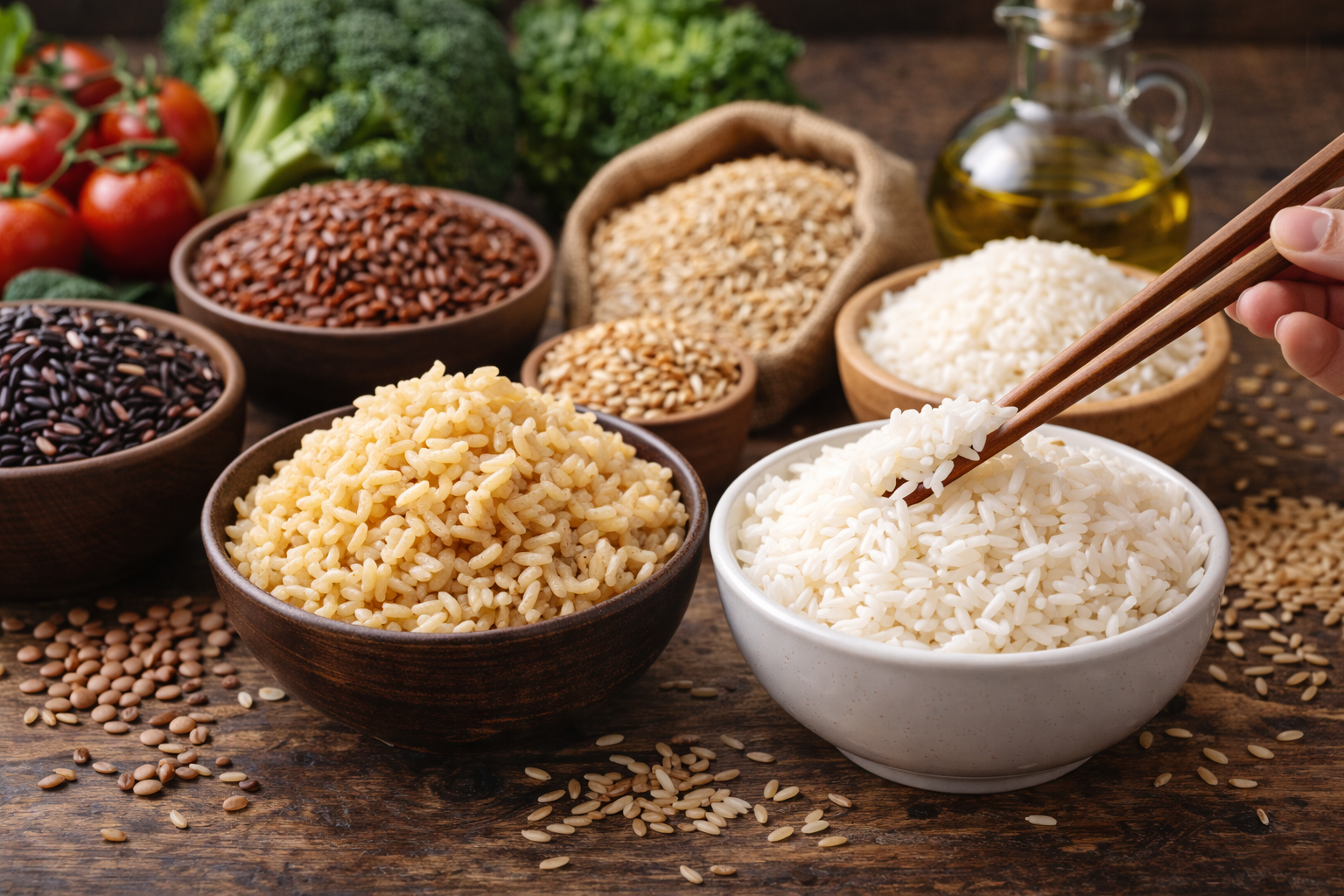
Yes, diabetics can eat rice, but portion size and rice type are crucial. White rice has a high glycemic index and can cause rapid spikes in blood sugar, while brown rice, parboiled rice, and basmati rice have a lower glycemic impact.
Health Benefits of Rice for Diabetics (When Eaten Correctly)
1. Provides Sustainable Energy
Rice supplies complex carbohydrates that provide energy when consumed in controlled portions.
2. Supports Digestive Health
Brown rice contains fiber that improves digestion and helps prevent constipation.
3. Helps with Meal Satisfaction
Including rice in moderation helps patients stick to meal plans and reduces cravings for unhealthy foods.
4. Supports Heart Health
Whole-grain rice varieties contain magnesium and antioxidants that support heart health, especially important for diabetics.
Best Rice Options for Diabetics
- Brown rice
- Parboiled rice
- Basmati rice (preferably brown basmati)
- Red rice
- Black rice
Avoid:
- Sticky rice
- Polished white rice
- Fried rice
- Instant or processed rice
Recommended Portion Size for Diabetics
Safe portion size:
- ½ cup cooked rice (80–100 g) per meal
Tips:
- Do not take rice in every meal
- Combine rice with vegetables, lentils, or lean protein
- Avoid eating rice alone
Best Way to Eat Rice for Diabetes Control
- Cook rice al dente (not overly soft)
- Allow rice to cool slightly before eating (helps reduce glycemic response)
- Use minimal oil and salt
- Avoid sugary sauces and gravies
Who Should Limit Rice Intake?
- People with poorly controlled blood sugar
- Patients with obesity or insulin resistance
- Those trying to lose weight
Consult a healthcare professional for personalized dietary advice.
Conclusion
Rice does not need to be completely eliminated from a diabetic diet. Choosing the right type of rice, practicing portion control, and combining rice with fiber and protein can help people with diabetes enjoy rice without harming blood sugar control.