Angiography is a widely used medical imaging test that helps doctors examine blood vessels and detect blockages, narrowing, or abnormalities in circulation. It plays a vital role in diagnosing heart disease, stroke, and other vascular conditions. Early detection through angiography can prevent serious complications and guide effective treatment.
What Is Angiography?
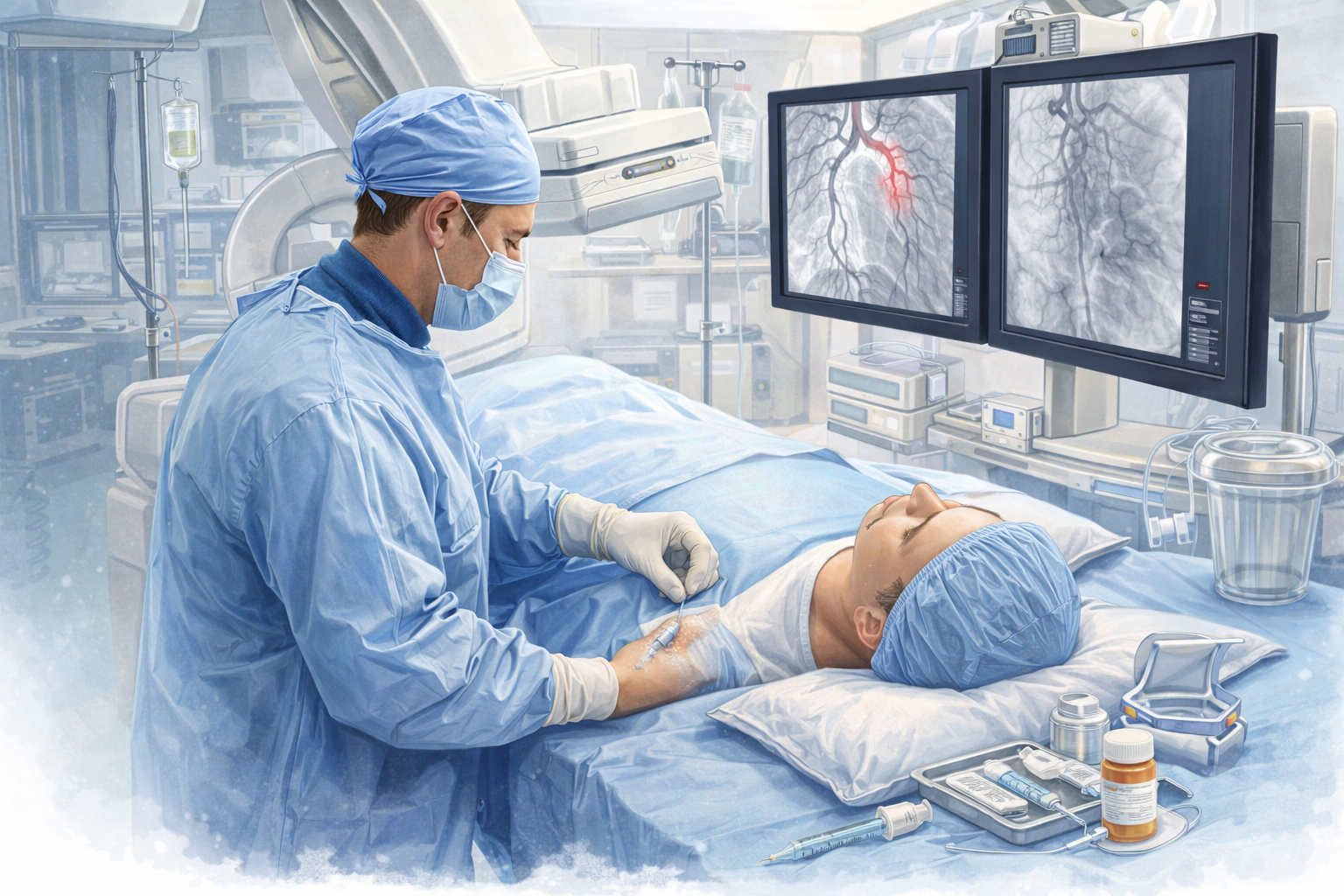
Angiography is a diagnostic procedure that uses X-rays and a special contrast dye to create detailed images of blood vessels. The dye makes arteries and veins visible on imaging, allowing doctors to identify problems such as narrowing, clots, or aneurysms.
Types of Angiography
Depending on the area being examined, angiography may include:
- Coronary angiography – evaluates heart arteries
- Cerebral angiography – examines blood vessels of the brain
- Peripheral angiography – checks arteries of arms and legs
- Renal angiography – assesses kidney blood vessels
- Pulmonary angiography – evaluates lung circulation
Why Is Angiography Done?
Doctors recommend angiography to:
- Detect blocked or narrowed arteries
- Diagnose coronary artery disease
- Identify causes of chest pain or stroke
- Assess blood flow to limbs
- Locate aneurysms or vascular malformations
- Plan treatments like angioplasty or bypass surgery
How Is Angiography Performed?
Angiography is usually done in a hospital or specialized diagnostic center.
Procedure Steps
- Local anesthesia is given at the insertion site (usually groin or wrist).
- A thin tube (catheter) is guided into the blood vessel.
- Contrast dye is injected through the catheter.
- X-ray images are taken to visualize blood flow.
- The catheter is removed, and pressure is applied to stop bleeding.
The procedure typically takes 30–60 minutes.
Preparation Before Angiography
Patients may be advised to:
- Avoid eating or drinking for several hours
- Inform the doctor about allergies or kidney problems
- Stop certain medications if instructed
- Undergo blood tests before the procedure
Risks and Complications
Angiography is generally safe, but possible risks include:
- Allergic reaction to contrast dye
- Bleeding or bruising at insertion site
- Infection (rare)
- Kidney problems in high-risk patients
- Irregular heartbeat (rare)
Most complications are mild and temporary.
Benefits of Angiography
- Accurate diagnosis of vascular disease
- Early detection of serious conditions
- Helps plan appropriate treatment
- May allow immediate intervention during the same procedure
Aftercare and Recovery
After angiography, patients are advised to:
- Rest for several hours
- Drink plenty of fluids
- Avoid heavy lifting for 24–48 hours
- Monitor the insertion site for swelling or pain
Most people return to normal activities within a day.
Angiography vs. CT Angiography
Traditional angiography is invasive, while CT angiography uses advanced imaging without catheter insertion. The choice depends on the patient’s condition and diagnostic needs.
When to Contact a Doctor
Seek medical help if you experience:
- Persistent bleeding or swelling
- Severe pain
- Fever or signs of infection
- Shortness of breath
Conclusion
Angiography is a reliable and life-saving diagnostic tool that helps identify blood vessel problems accurately. With proper preparation and expert care, the procedure is safe and highly effective. Early diagnosis through angiography can significantly improve treatment outcomes and quality of life.