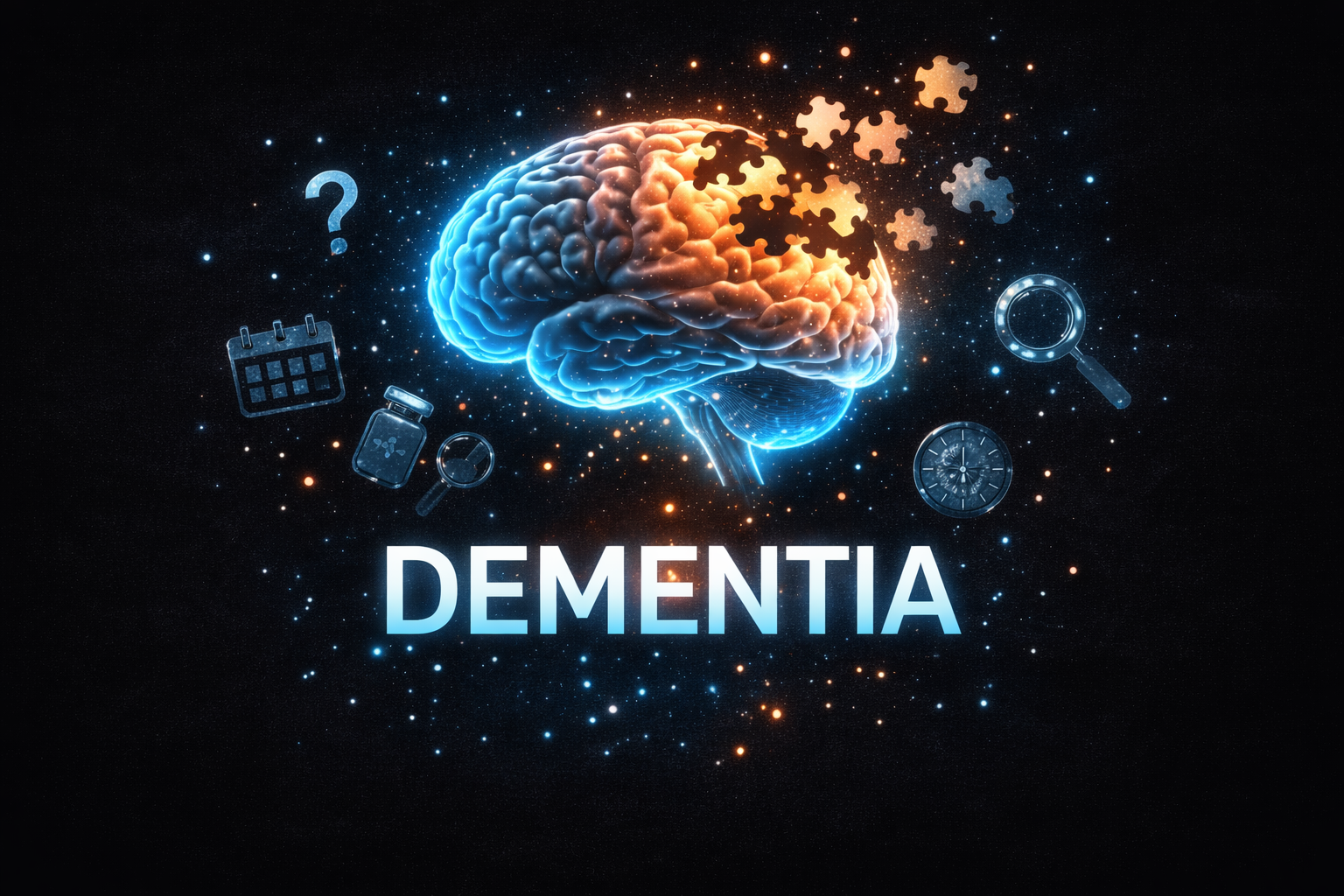
Dementia is a serious and progressive condition that affects memory, thinking, behavior, and the ability to perform daily activities. It is not a normal part of aging, although it is more common in older adults. Early awareness, timely diagnosis, and proper management can significantly improve quality of life for individuals living with dementia and their caregivers.
What Is Dementia?
Dementia is an umbrella term used to describe a group of neurological disorders characterized by a decline in cognitive function severe enough to interfere with everyday life. It affects memory, reasoning, communication, judgment, and emotional control.
Types of Dementia
Several types of dementia exist, including:
1. Alzheimer’s Disease
The most common form of dementia, accounting for the majority of cases. It primarily affects memory and learning.
2. Vascular Dementia
Caused by reduced blood flow to the brain, often due to stroke or chronic blood vessel damage.
3. Lewy Body Dementia
Associated with abnormal protein deposits in the brain, leading to memory loss, hallucinations, and movement problems.
4. Frontotemporal Dementia
Affects personality, behavior, and language, often occurring at a younger age compared to other dementias.
Common Causes and Risk Factors
Dementia can develop due to various factors, such as:
- Aging
- Family history of dementia
- Brain injury or stroke
- High blood pressure and diabetes
- Smoking and excessive alcohol use
- Poor diet and lack of physical activity
Symptoms of Dementia
Symptoms of dementia gradually worsen over time and may include:
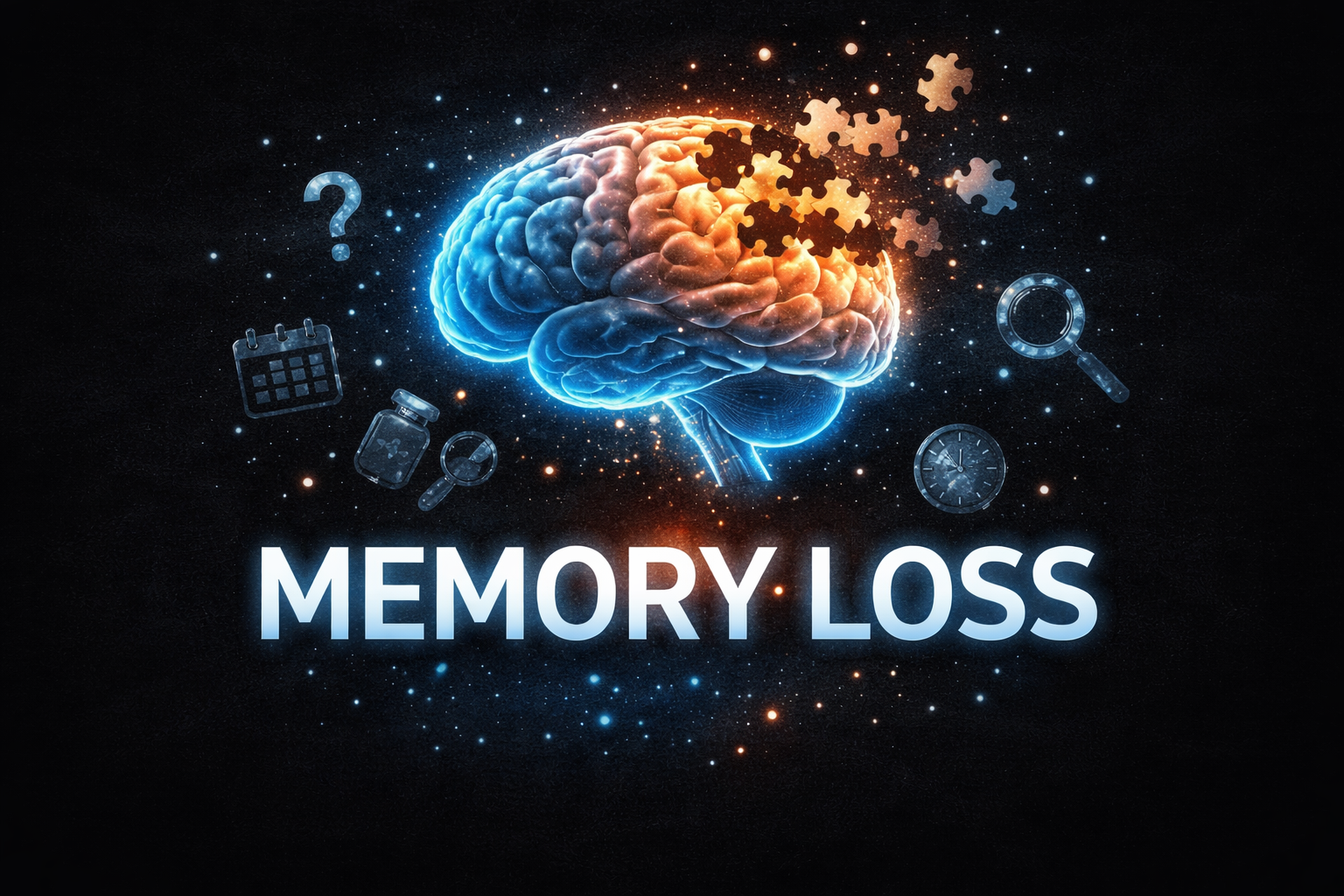
- Memory loss, especially recent events
- Difficulty with communication and language
- Confusion about time and place
- Poor judgment and decision-making
- Changes in mood, behavior, or personality
- Difficulty performing familiar tasks
Diagnosis of Dementia
Early diagnosis plays a key role in effective management. Doctors may use:
- Medical and family history
- Cognitive and memory assessments
- Blood tests to rule out vitamin deficiencies or infections
- Brain imaging (CT scan or MRI)
Treatment and Management of Dementia
Although there is no complete cure for dementia, treatment focuses on slowing progression and improving quality of life.
Medications
Certain medicines may help manage symptoms such as memory loss, confusion, and behavioral changes.
Lifestyle Changes
- Regular physical exercise
- Healthy, balanced diet
- Adequate sleep
- Mental stimulation through reading and puzzles
Supportive Care
- Occupational therapy
- Counseling for patients and caregivers
- Safe and structured home environment
Prevention and Brain Health Tips
While dementia cannot always be prevented, the risk can be reduced by:
- Controlling blood pressure and blood sugar
- Staying socially active
- Avoiding smoking and excessive alcohol
- Maintaining a healthy weight
- Keeping the brain active throughout life
When to See a Doctor
Medical advice should be sought if a person experiences:
- Persistent memory problems
- Sudden personality or behavioral changes
- Difficulty managing daily activities
Early medical attention allows better planning and care.
Conclusion
Dementia is a complex condition that affects not only individuals but also families and caregivers. Understanding its causes, symptoms, and management options empowers people to seek early diagnosis and appropriate care. With proper medical support and lifestyle adjustments, individuals with dementia can lead safer and more dignified lives.