Tea is one of the most popular beverages in the world, enjoyed by millions for its refreshing taste and calming aroma. Whether it’s black tea, green tea, herbal tea, or flavored blends, tea is often linked with health benefits. However, excessive consumption may also cause unwanted effects. In this blog, we explore the positive and negative effects of tea on health, and how to enjoy it safely.
What Is Tea?
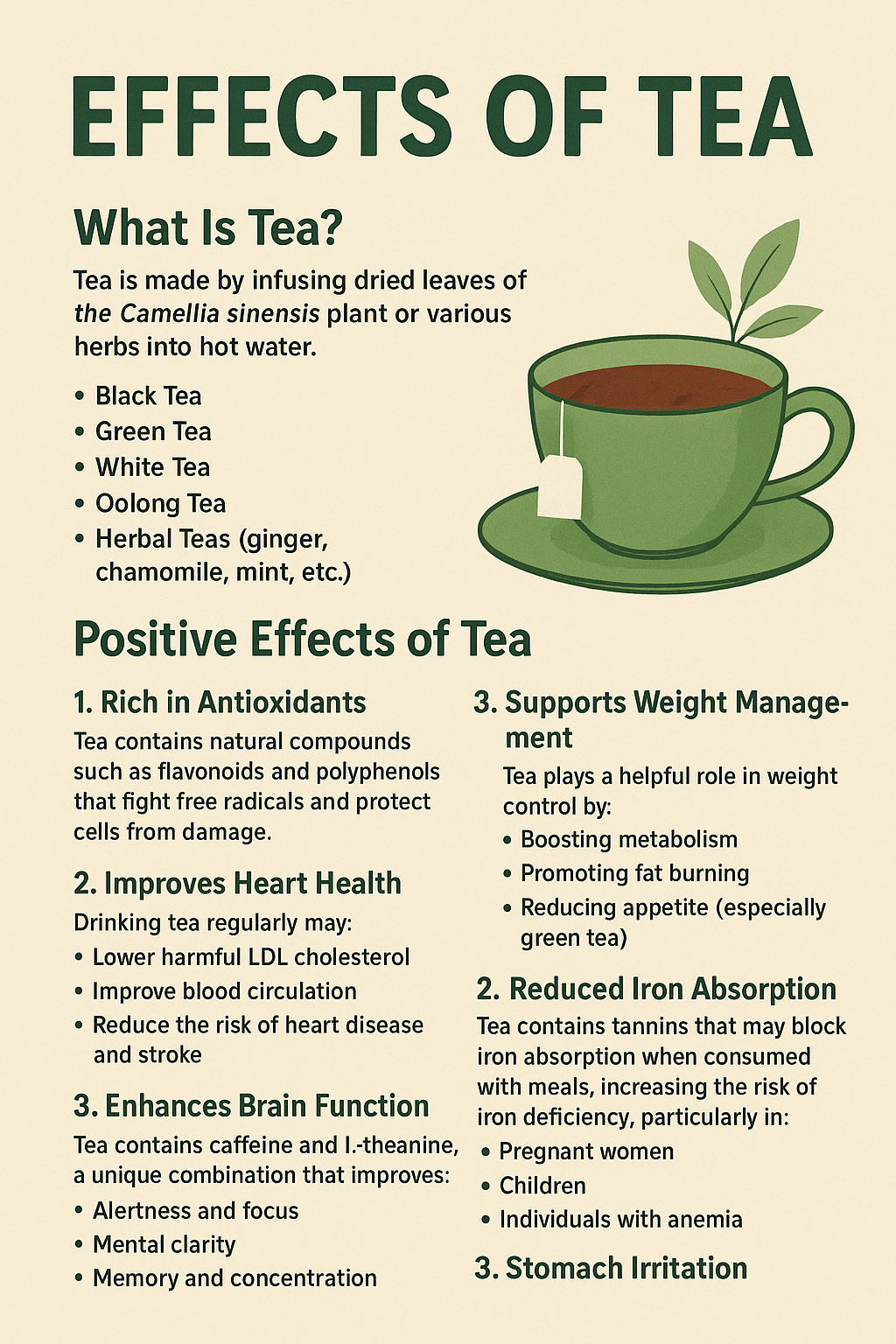
Tea is made by infusing dried leaves of the Camellia sinensis plant or various herbs into hot water. Popular types include:
- Black Tea
- Green Tea
- White Tea
- Oolong Tea
- Herbal Teas (ginger, chamomile, mint, etc.)
Each type has unique nutritional properties and health benefits.
Positive Effects of Tea
1. Rich in Antioxidants
Tea contains natural compounds such as flavonoids and polyphenols that fight free radicals and protect cells from damage. These antioxidants help slow aging and reduce the risk of chronic diseases.
2. Improves Heart Health
Drinking tea regularly may:
- Lower harmful LDL cholesterol
- Improve blood circulation
- Reduce the risk of heart disease and stroke
Green tea, in particular, is well known for promoting cardiovascular wellness.
3. Enhances Brain Function
Tea contains caffeine and L-theanine, a unique combination that improves:
- Alertness and focus
- Mental clarity
- Memory and concentration
Unlike coffee, tea provides gentler stimulation without excessive jitters.
4. Supports Weight Management
Tea plays a helpful role in weight control by:
- Boosting metabolism
- Promoting fat burning
- Reducing appetite (especially green tea)
Many people include tea as part of their healthy weight-loss routine.
5. Strengthens Immunity
Herbal and green teas enhance immune defense thanks to antimicrobial properties. Regular intake may help prevent colds, flu, and minor infections.
6. Aids Digestion
Tea helps soothe the digestive system by:
- Reducing bloating
- Relieving nausea
- Improving digestion
Ginger and peppermint teas are especially effective for stomach comfort.
Negative Effects of Tea
While tea has several benefits, excess consumption can cause health issues:
1. Caffeine-Related Problems
Too much tea may lead to:
- Insomnia
- Rapid heartbeat
- Anxiety
- Headaches
People sensitive to caffeine should limit intake, especially in the evening.
2. Reduced Iron Absorption
Tea contains tannins that may block iron absorption when consumed with meals, increasing the risk of iron deficiency, particularly in:
- Pregnant women
- Children
- Individuals with anemia
3. Stomach Irritation
Strong tea on an empty stomach may cause:
- Acid reflux
- Stomach pain
- Nausea
4. Tooth Staining
Regular tea consumption can discolor teeth due to tannins that cling to enamel.
5. Dehydration Risk
Although tea contains water, its caffeine content can increase urine output, potentially contributing to mild dehydration when consumed in large quantities.
How Much Tea Is Safe?
Most health experts recommend:
☕ 2–3 cups of tea per day for optimal health benefits without harmful effects.
Tips for Safe Tea Drinking
- Avoid drinking tea on an empty stomach
- Do not combine tea with iron-rich meals
- Replace sugar-loaded tea with natural or herbal options
- Brush teeth after tea to prevent staining
- Choose caffeine-free teas before bedtime
Best Teas for Health
- Green Tea – Weight loss & heart protection
- Chamomile Tea – Relaxation & sleep
- Ginger Tea – Digestion & immunity
- Mint Tea – Stomach comfort & freshness
- White Tea – Skin health & antioxidants
Conclusion
Tea is a powerful natural beverage with impressive health benefits, from boosting immunity to improving heart and brain health. However, moderation is essential. When consumed wisely, tea can be a refreshing and health-promoting addition to your daily routine.
Final Words
If enjoyed sensibly, tea can become your daily wellness companion. Balance your cups, avoid excess caffeine, and choose herbal blends when needed to gain the maximum benefits without side effects.