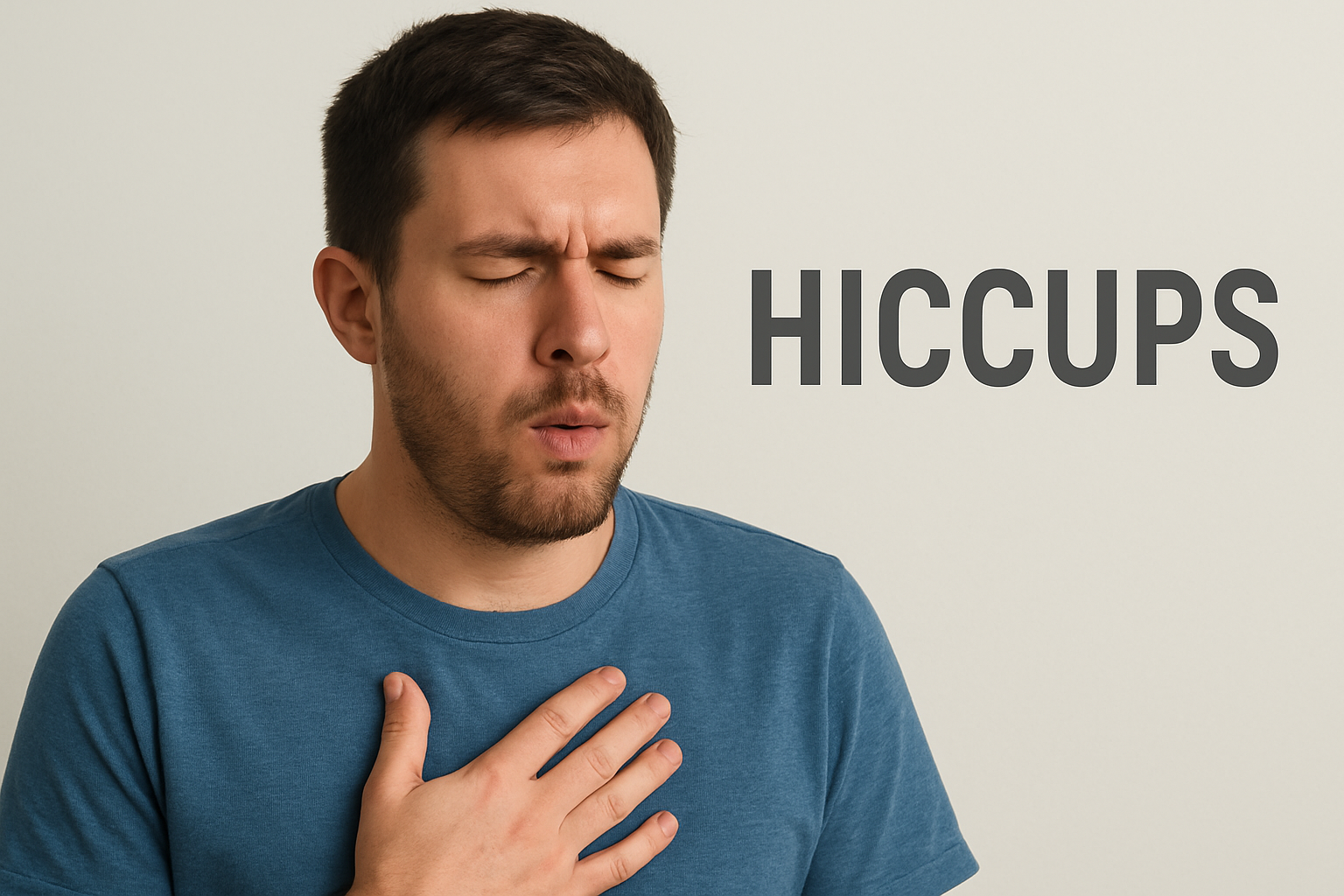
Hiccups are sudden, involuntary contractions of the diaphragm followed by the quick closing of the vocal cords, which produces the familiar “hic” sound. Although hiccups are usually harmless and temporary, persistent or recurrent hiccups can sometimes signal an underlying medical problem. Understanding why hiccups occur and how to manage them can help prevent discomfort and anxiety.
What Causes Hiccups?
Hiccups happen when the diaphragm muscle—responsible for breathing—contracts unexpectedly. This is followed by a sudden closure of the vocal cords, which creates the hiccup sound.
Common triggers include:
- Eating too fast
- Overeating or consuming spicy foods
- Drinking carbonated beverages
- Sudden temperature changes
- Emotional stress or excitement
- Swallowing air while chewing gum or smoking
Medical Causes of Persistent Hiccups
Hiccups lasting more than 48 hours are called persistent hiccups and may be associated with medical conditions such as:
- Acid reflux (GERD)
- Gastritis or stomach irritation
- Diabetes complications
- Kidney disease
- Stroke or brain injury
- Infections
- Certain medications
If hiccups last longer than one month, they are classified as intractable and require full medical evaluation.
Symptoms of Hiccups
Typical features include:
- Repetitive “hic” sound
- Sudden jerking movements of the chest or abdomen
- Mild throat discomfort
- Interrupted speech or eating
In most people, symptoms resolve within minutes to hours without treatment.
Simple Home Remedies for Hiccups
Several no-cost home techniques may help stop hiccups quickly:
- Holding your breath for 10–15 seconds
- Drinking a glass of cold water slowly
- Gargling with ice water
- Pulling your knees up to your chest
- Swallowing a teaspoon of sugar or honey
- Breathing through a paper bag
These methods stimulate the vagus nerve, helping relax diaphragm spasms.
Medical Treatment Options
For persistent or severe hiccups, doctors may prescribe medications such as:
- Chlorpromazine
- Baclofen
- Gabapentin
- Metoclopramide
Treatment focuses on managing the underlying cause along with stopping the hiccups.
Prevention Tips
You can reduce hiccup episodes by following these healthy habits:
- Eat slowly and chew food thoroughly
- Avoid overeating or very spicy meals
- Limit fizzy drinks
- Manage stress with breathing exercises
- Quit smoking
- Maintain good digestion
When to See a Doctor
Seek medical attention if:
- Hiccups last more than 48 hours
- They interfere with sleep or eating
- They are associated with chest pain, vomiting, or weight loss
- You have a history of neurological or metabolic disease
Prompt evaluation may uncover and treat the root cause.
Final Thoughts
Hiccups are a common and usually harmless reflex, but persistent cases should not be ignored. Simple habits and home techniques can prevent or resolve most episodes. However, ongoing hiccups may be a sign of an underlying condition that requires professional care.
Staying mindful of triggers, maintaining healthy eating habits, and seeking medical advice when necessary can help keep hiccups from becoming a daily disturbance.