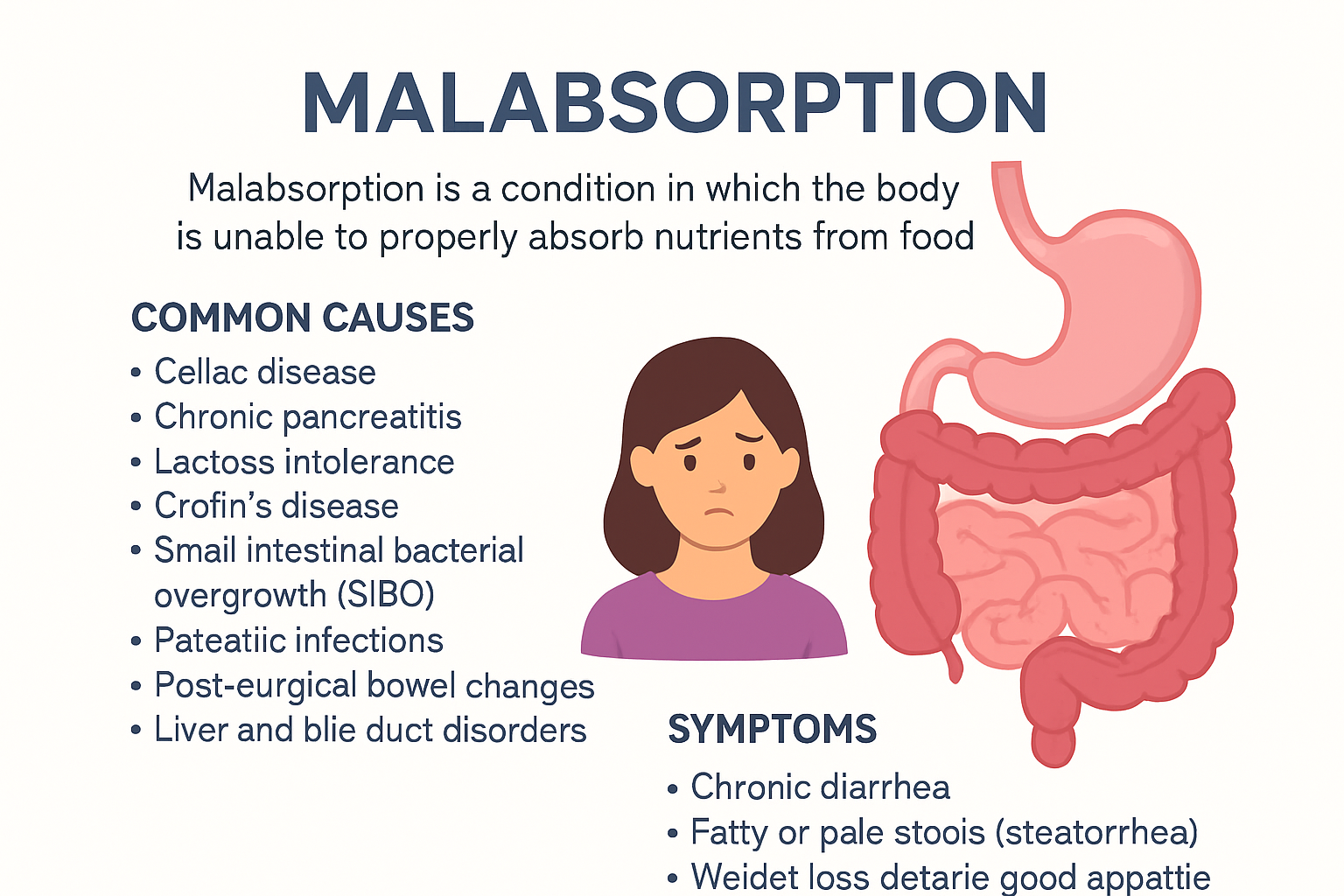
Malabsorption is a medical condition in which the body is unable to properly absorb nutrients such as vitamins, minerals, fats, proteins, and carbohydrates from food. Over time, this poor nutrient absorption can lead to weakness, weight loss, anemia, fragile bones, and overall poor health. Early recognition and treatment are essential for preventing long-term complications.
What Is Malabsorption?
Under normal conditions, food is broken down in the digestive tract and nutrients are absorbed through the lining of the small intestine into the bloodstream. In malabsorption syndromes, this process is disrupted due to problems with digestion or damage to the intestinal lining, resulting in nutrient deficiencies even when food intake is adequate.
Common Causes of Malabsorption
Several medical conditions interfere with nutrient absorption, including:
- Celiac disease – gluten damages intestinal lining
- Chronic pancreatitis – lack of digestive enzymes
- Lactose intolerance – poor digestion of milk sugar
- Crohn’s disease – inflammation of intestines
- Small intestinal bacterial overgrowth (SIBO)
- Parasitic infections
- Post-surgical bowel changes
- Liver and bile duct disorders
Symptoms of Malabsorption
Symptoms vary depending on which nutrient is affected but commonly include:
- Chronic diarrhea
- Fatty or pale stools (steatorrhea)
- Weight loss despite good appetite
- Bloating and gas
- Fatigue and weakness
- Hair loss and brittle nails
- Anemia and pale skin
- Bone pain or frequent fractures
Children may show delayed growth and poor weight gain.
Nutritional Deficiencies
Long-term malabsorption can result in:
- Iron deficiency anemia – causing tiredness and breathlessness
- Vitamin B12 deficiency – leading to nerve damage and memory issues
- Vitamin D and calcium deficiency – contributing to osteoporosis
- Protein malnutrition – muscle wasting and swelling
Diagnosis of Malabsorption
Doctors may diagnose malabsorption using:
- Blood tests for nutrient deficiencies
- Stool fat analysis
- Breath tests to detect SIBO or lactose intolerance
- Endoscopy and intestinal biopsy
- Imaging scans or pancreatic enzyme testing
Early diagnosis prevents irreversible complications.
Treatment Options
Treatment targets the underlying cause and nutritional deficiencies:
✅ Dietary Management
- Gluten-free diet for celiac disease
- Lactose-free diet for lactose intolerance
- Low-fat or specialized diets as recommended
✅ Medication & Supplements
- Digestive enzyme supplements
- Vitamin and mineral replacements
- Antibiotics for bacterial overgrowth
- Anti-inflammatory medications for Crohn’s disease
✅ Hydration & Nutritional Therapy
- Oral rehydration solutions
- High-protein nutritional drinks
- Tube feeding or IV nutrition in severe cases
Preventing Complications
Regular medical follow-up, balanced nutrition, and early treatment help prevent:
- Severe malnutrition
- Anemia
- Growth failure in children
- Bone fractures
- Immune weakness
When to See a Doctor
Seek medical evaluation if you have:
✅ Chronic diarrhea lasting more than 2 weeks
✅ Unexplained weight loss
✅ Fatty or foul-smelling stools
✅ Persistent fatigue or weakness
✅ Nutritional deficiency symptoms
Early medical care can restore proper digestion and nutrient balance.
Final Thoughts
Malabsorption is a treatable condition when identified early. With accurate diagnosis, personalized diet plans, and appropriate supplements, most individuals can regain nutritional health and prevent serious long-term complications. Recognizing symptoms and seeking timely care make a significant difference in recovery and quality of life.