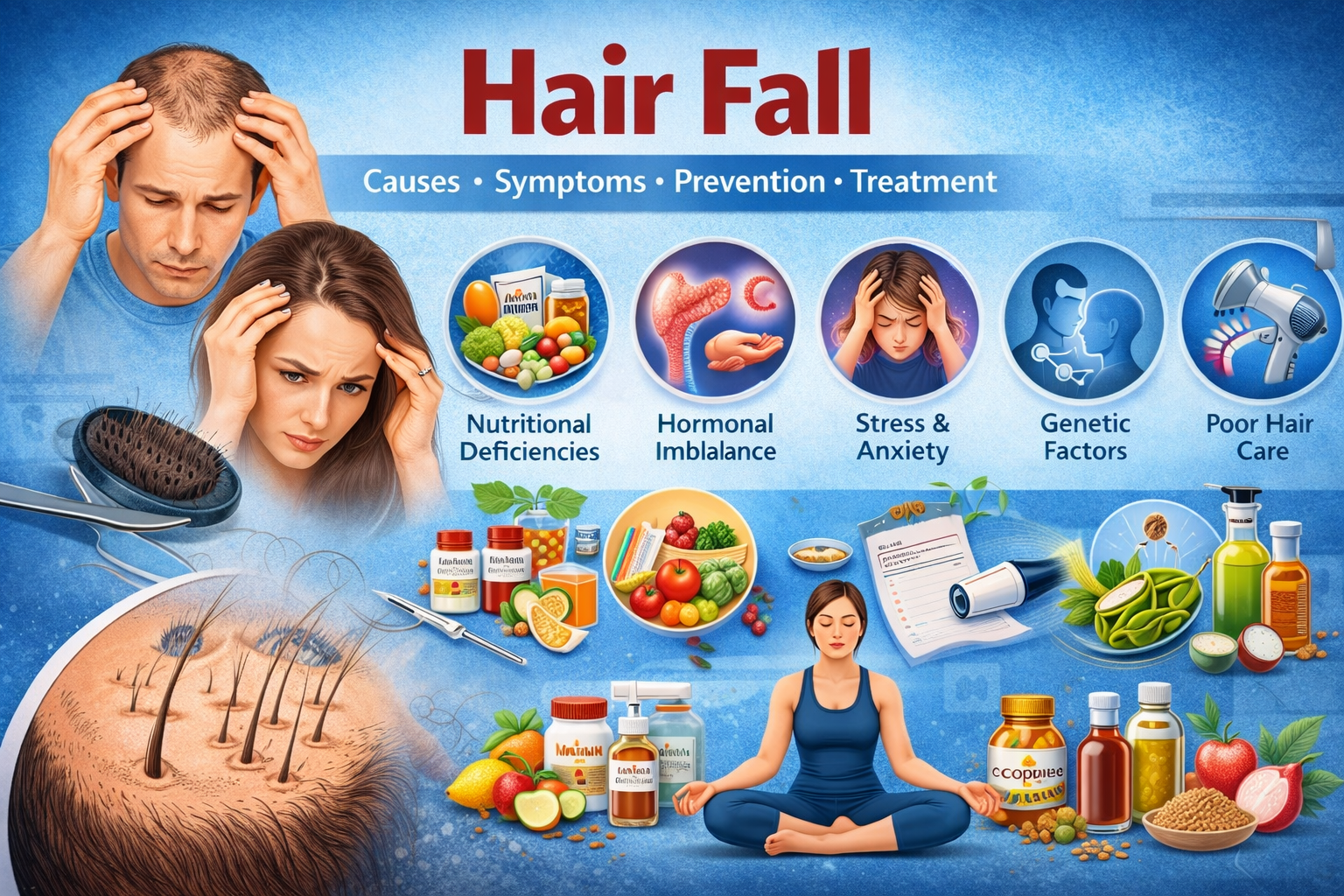
Hair fall is a common problem affecting both men and women of all ages. While losing a few strands daily is normal, excessive hair fall can be distressing and may indicate an underlying health issue. Understanding the causes of hair fall and adopting proper care can help control hair loss and promote healthy hair growth.
What Is Hair Fall?
Hair fall refers to the excessive shedding of hair from the scalp or other parts of the body. Normally, a person may lose 50–100 hairs per day. Hair fall becomes a concern when hair loss exceeds normal limits or leads to visible thinning or bald patches.
Common Causes of Hair Fall
1. Nutritional Deficiencies
Lack of iron, protein, zinc, biotin, and vitamins can weaken hair roots and cause hair fall.
2. Hormonal Imbalance
Hormonal changes during pregnancy, menopause, thyroid disorders, or polycystic ovarian syndrome (PCOS) can trigger hair loss.
3. Stress and Anxiety
Physical or emotional stress can push hair follicles into a resting phase, leading to sudden hair fall (telogen effluvium).
4. Genetic Factors
Male and female pattern hair loss is inherited and is one of the most common causes of progressive hair thinning.
5. Medical Conditions
Diseases such as anemia, diabetes, autoimmune disorders, and scalp infections can contribute to hair fall.
6. Poor Hair Care Practices
Excessive heat styling, tight hairstyles, chemical treatments, and harsh shampoos damage hair and increase hair loss.
Symptoms of Hair Fall
- Excessive hair shedding while combing or washing
- Thinning of hair
- Receding hairline
- Bald patches on the scalp
- Weak, brittle hair
Effective Ways to Control Hair Fall
1. Balanced Diet
Eat a nutrient-rich diet including:
- Eggs, fish, and lean meat
- Green leafy vegetables
- Nuts and seeds
- Fruits rich in vitamins
2. Proper Hair Care
- Use mild, sulfate-free shampoos
- Avoid excessive heat styling
- Do not tie hair too tightly
- Oil the scalp gently
3. Manage Stress
Practice relaxation techniques such as:
- Exercise
- Yoga and meditation
- Adequate sleep
4. Medical Treatment
Depending on the cause, doctors may recommend:
- Iron or vitamin supplements
- Medicated shampoos
- Topical treatments
- Hormonal therapy
Natural Remedies for Hair Fall
- Coconut oil or olive oil massage
- Aloe vera gel application
- Onion juice (under guidance)
- Fenugreek seed paste
Note: Natural remedies should be used carefully and may not replace medical treatment.
When to See a Doctor
Consult a healthcare professional if:
- Hair fall is sudden or severe
- Bald patches appear
- Hair loss is associated with itching or pain
- Hair fall continues despite home care
Prevention Tips
- Maintain a healthy lifestyle
- Avoid smoking and excessive caffeine
- Protect hair from pollution and sun exposure
- Get regular health checkups
Conclusion
Hair fall is a common yet manageable condition. Identifying the underlying cause and adopting a healthy lifestyle, proper hair care, and timely medical treatment can significantly reduce hair loss and promote stronger, healthier hair. Early intervention is the key to preventing permanent hair damage.