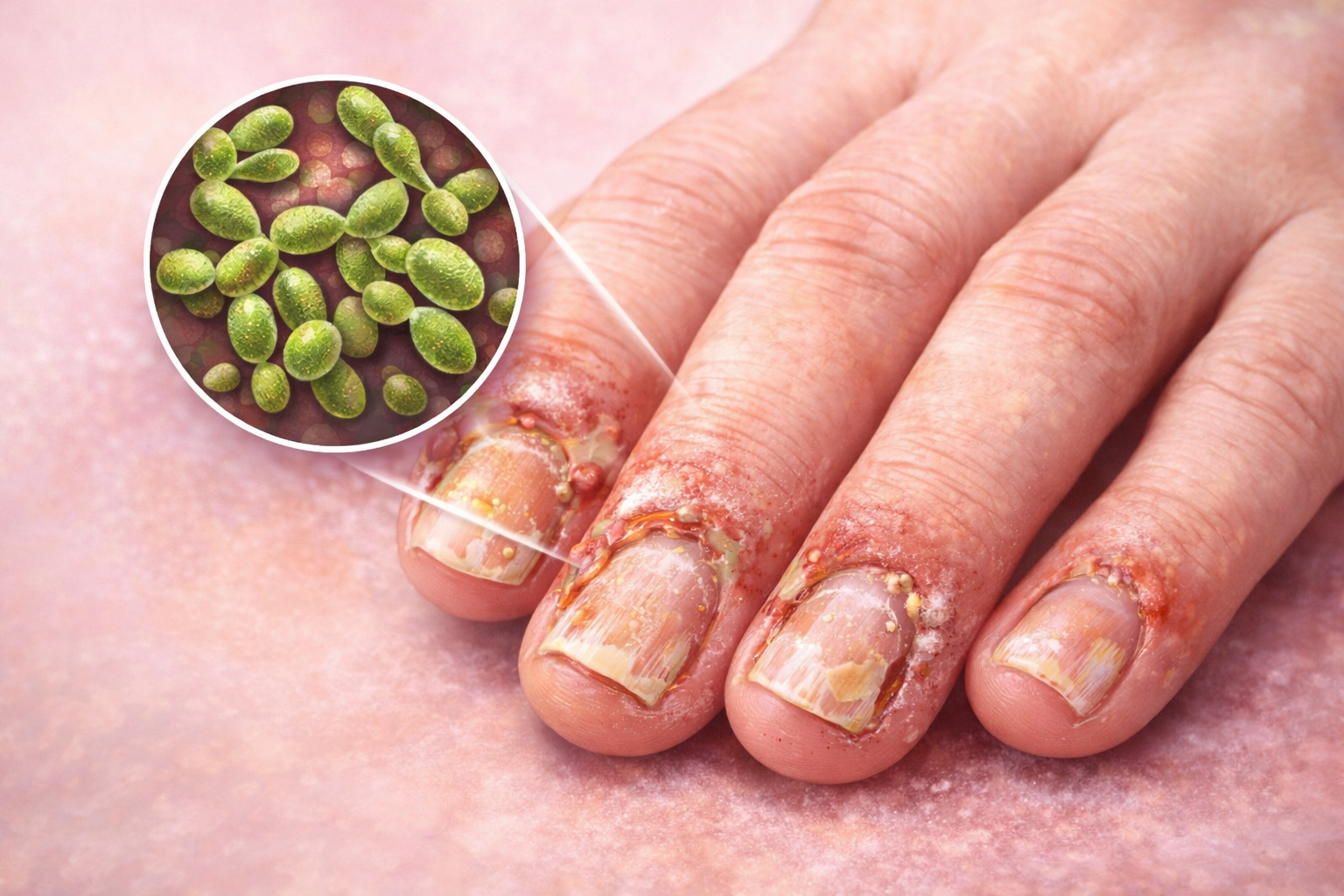
Nail candidiasis is a fungal infection of the fingernails or toenails caused by Candida species, most commonly Candida albicans. Unlike typical nail fungus caused by dermatophytes, Candida infections often affect people whose hands or feet are frequently exposed to moisture. Early recognition and proper treatment are essential to prevent nail damage and recurrence.
What Is Nail Candidiasis?
Nail candidiasis is a yeast infection of the nail plate and surrounding nail folds. It commonly involves fingernails but can also affect toenails, especially in individuals with chronic health conditions. The infection may start around the cuticle and gradually spread to the nail.
Causes of Nail Candidiasis
Several factors increase the risk of developing nail candidiasis, including:
- Prolonged exposure to water or moisture
- Frequent hand washing or wet work
- Diabetes mellitus
- Weak immune system
- Use of antibiotics or corticosteroids
- Poor nail hygiene
- Trauma to the nail or cuticle
- Wearing tight or non-breathable footwear
Symptoms of Nail Candidiasis
Common signs and symptoms include:
- Redness and swelling around the nail (paronychia)
- Pain or tenderness of the nail fold
- Thickened, brittle, or discolored nails
- White, yellow, or brown nail changes
- Separation of the nail from the nail bed
- Slow nail growth
- Loss of nail shine
In chronic cases, the cuticle may disappear completely.
How Is Nail Candidiasis Diagnosed?
Diagnosis is based on:
- Clinical examination
- Microscopic examination of nail scrapings
- Fungal culture (to identify Candida species)
- Blood sugar testing in suspected diabetic patients
Accurate diagnosis is important to distinguish Candida infection from other nail disorders.
Treatment of Nail Candidiasis
Treatment depends on severity and duration of infection:
1. Topical Antifungal Therapy
- Antifungal nail lacquers
- Creams containing clotrimazole, ketoconazole, or miconazole
Best for mild or early infections.
2. Oral Antifungal Medications
- Fluconazole or itraconazole for moderate to severe cases
- Used under medical supervision
3. Supportive Care
- Keeping nails clean and dry
- Trimming affected nails regularly
- Treating underlying conditions such as diabetes
⚠️ Long-term or recurrent infections should not be self-treated.
Nail Candidiasis in Diabetic and Immunocompromised Patients
People with diabetes or weakened immunity are at higher risk of persistent and severe nail candidiasis. Strict blood sugar control and early antifungal treatment are crucial to prevent complications.
Prevention Tips
You can reduce the risk of nail candidiasis by following these measures:
- Keep hands and feet dry
- Avoid prolonged contact with water
- Use protective gloves for wet work
- Maintain proper nail hygiene
- Avoid cutting cuticles aggressively
- Wear breathable footwear
- Manage chronic illnesses effectively
When to See a Doctor
Consult a healthcare professional if:
- Nail infection does not improve with treatment
- Pain, swelling, or pus develops
- Multiple nails are affected
- You have diabetes or immune disorders
Conclusion
Nail candidiasis is a common but often overlooked fungal nail infection. Early diagnosis, appropriate antifungal therapy, and preventive care can lead to complete recovery and healthy nails. Seeking medical advice ensures effective treatment and reduces the risk of recurrence.