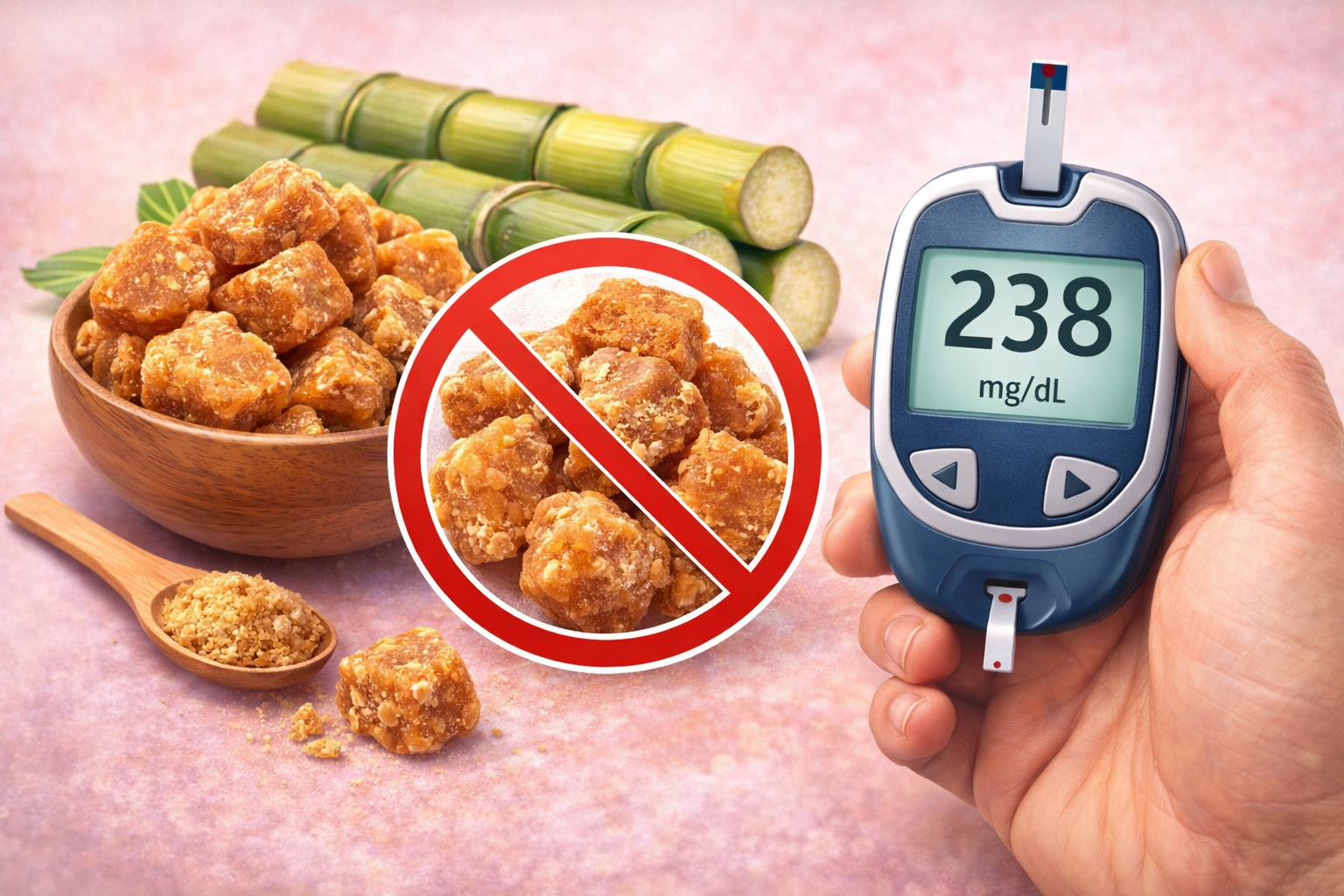
urh, also known as jaggery, is a traditional natural sweetener widely used in South Asia. Many people believe that gurh is healthier than refined sugar and therefore safe for diabetic patients. But is gurh really safe for people with diabetes? Let’s explore the facts based on medical and nutritional science.
What Is Gurh (Jaggery)?
Gurh is a natural sweetener made from sugarcane juice or palm sap by boiling and concentrating it. Unlike white sugar, gurh undergoes minimal processing and retains small amounts of minerals such as iron, calcium, potassium, and magnesium.
Because of its “natural” label, gurh is often considered a healthier alternative to sugar.
Nutritional Value of Gurh
Gurh mainly consists of:
- Sucrose (simple carbohydrates)
- Small amounts of iron and minerals
- Calories similar to refined sugar
Despite containing trace nutrients, gurh is still high in carbohydrates and calories, which directly affect blood glucose levels.
Can Diabetic Patients Eat Gurh?
Short Answer: No, gurh is not safe for diabetics in regular amounts.
Although gurh is less processed than white sugar, it raises blood sugar levels rapidly, just like regular sugar. For people with diabetes, this sudden rise can lead to poor glycemic control and long-term complications.
Glycemic Index of Gurh
Gurh has a moderate to high glycemic index, meaning it causes a quick increase in blood glucose. This makes it unsuitable for people with diabetes, especially those with uncontrolled blood sugar.
Common Myths About Gurh and Diabetes
Myth 1: Gurh is natural, so it is safe for diabetics
Truth: Natural does not mean sugar-free. Gurh still contains high amounts of sucrose.
Myth 2: Gurh is better than white sugar for diabetes
Truth: Both raise blood sugar significantly. The difference is minimal for diabetic control.
Myth 3: Small amounts of gurh are harmless
Truth: Even small amounts can cause blood sugar spikes, especially in insulin-resistant individuals.
Risks of Eating Gurh for Diabetic Patients
- Sudden rise in blood sugar levels
- Difficulty in maintaining HbA1c targets
- Increased risk of diabetic complications
- Weight gain due to high calorie content
Are There Any Safe Ways for Diabetics to Consume Gurh?
If blood sugar is well-controlled and consumption is very occasional, a very small quantity of gurh may be taken:
- Only after meals
- Under medical or dietitian guidance
- With frequent blood sugar monitoring
However, routine use is not recommended.
Healthier Alternatives to Gurh for Diabetics
Diabetic patients can opt for safer sweetening options such as:
- Stevia
- Erythritol
- Sucralose (in moderation)
- Natural sweetness from fruits (portion-controlled)
These alternatives have minimal or no effect on blood glucose levels.
Gurh and Prediabetes
People with prediabetes should also limit or avoid gurh, as frequent consumption may accelerate progression to type 2 diabetes.
Final Verdict
While gurh is often promoted as a healthier sugar, it is not suitable for diabetic patients due to its high carbohydrate content and blood sugar–raising effect. Diabetics should focus on balanced nutrition, portion control, and low-glycemic alternatives to maintain optimal blood glucose levels.
Conclusion
For people with diabetes, gurh is not a safe substitute for sugar. Maintaining stable blood sugar levels is more important than choosing “natural” sweeteners. Always consult a healthcare professional before making dietary changes.